AI Layoffs Spread Beyond Consulting
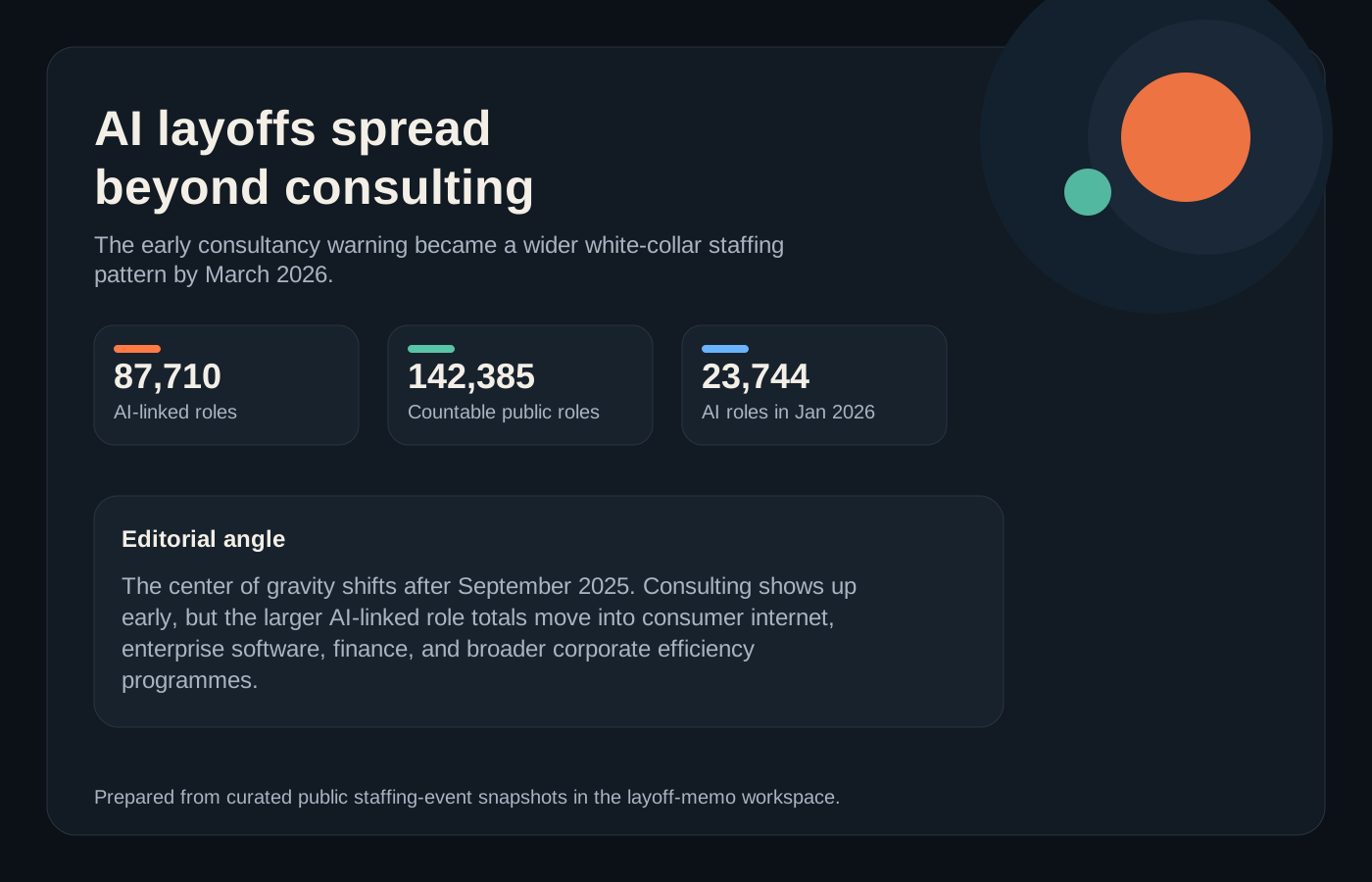
Consulting flashed the early warning, but by early 2026 the seeded dataset already contained 87,710 countable AI-linked roles across a much broader white-collar spread.
The early consultancy warning became a wider white-collar staffing pattern by early 2026, with 87,710 countable AI-linked roles across the current seeded dataset.
By March 2026, the AI layoff story looks different from the one visible at the end of September 2025. The early warning signs were real, especially in consulting and IT services. But the broader pattern that emerged afterward is not a consultancy-only story. It is a wider white-collar reset stretching across consumer internet, enterprise software, platform companies, finance, and general corporate efficiency programs.
In our latest seeded dataset, which covers public staffing events from February 2025 through March 2026, there are 40 events in total and 24 of them are AI-linked in some way. More importantly, 35 of those events carry usable headcount figures, and those countable rows sum to 142,385 reported roles. AI-linked rows alone account for 87,710 of those roles. That does not mean AI directly caused every cut. Some companies tied layoffs explicitly to AI, some used AI as part of a broader efficiency argument, and others were linked to AI mainly through credible reporting. Even with that caution, the direction is hard to miss: after late 2025, the volume of public staffing moves framed around AI rose sharply.
The cutoff matters. This snapshot stops at March 2026, so later April 2026 roundup items belong in the next dataset refresh, not in this published pack.
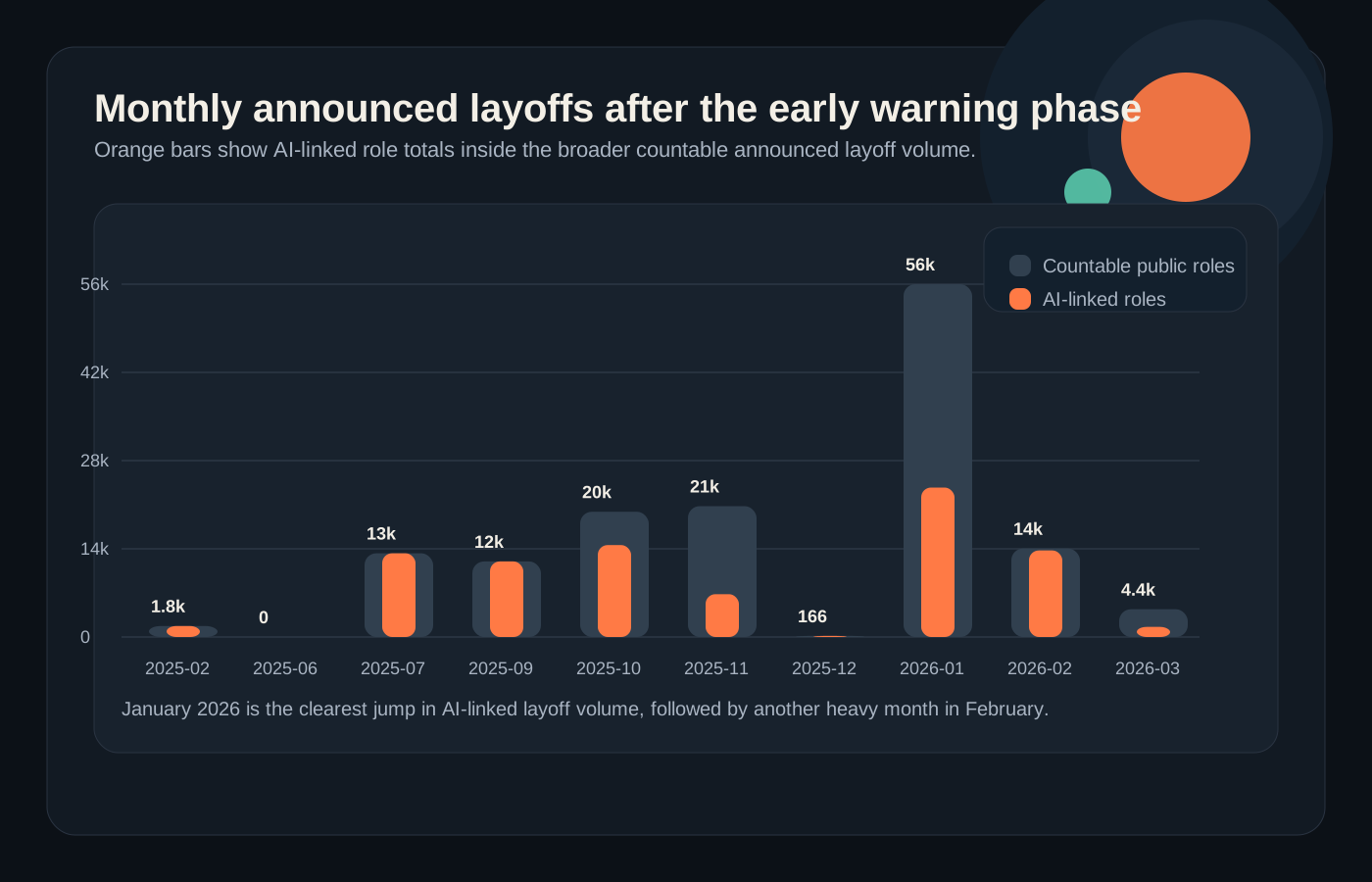
The acceleration shows up even more clearly in the monthly role totals. October 2025 already contributes 14,600 AI-linked roles in countable events. January 2026 then jumps to 23,744 AI-linked roles. February adds another 13,750. Those months are not dominated by classic consultancies. They are dominated by software, platforms, and large employers deciding they can redirect spending toward AI while running leaner.
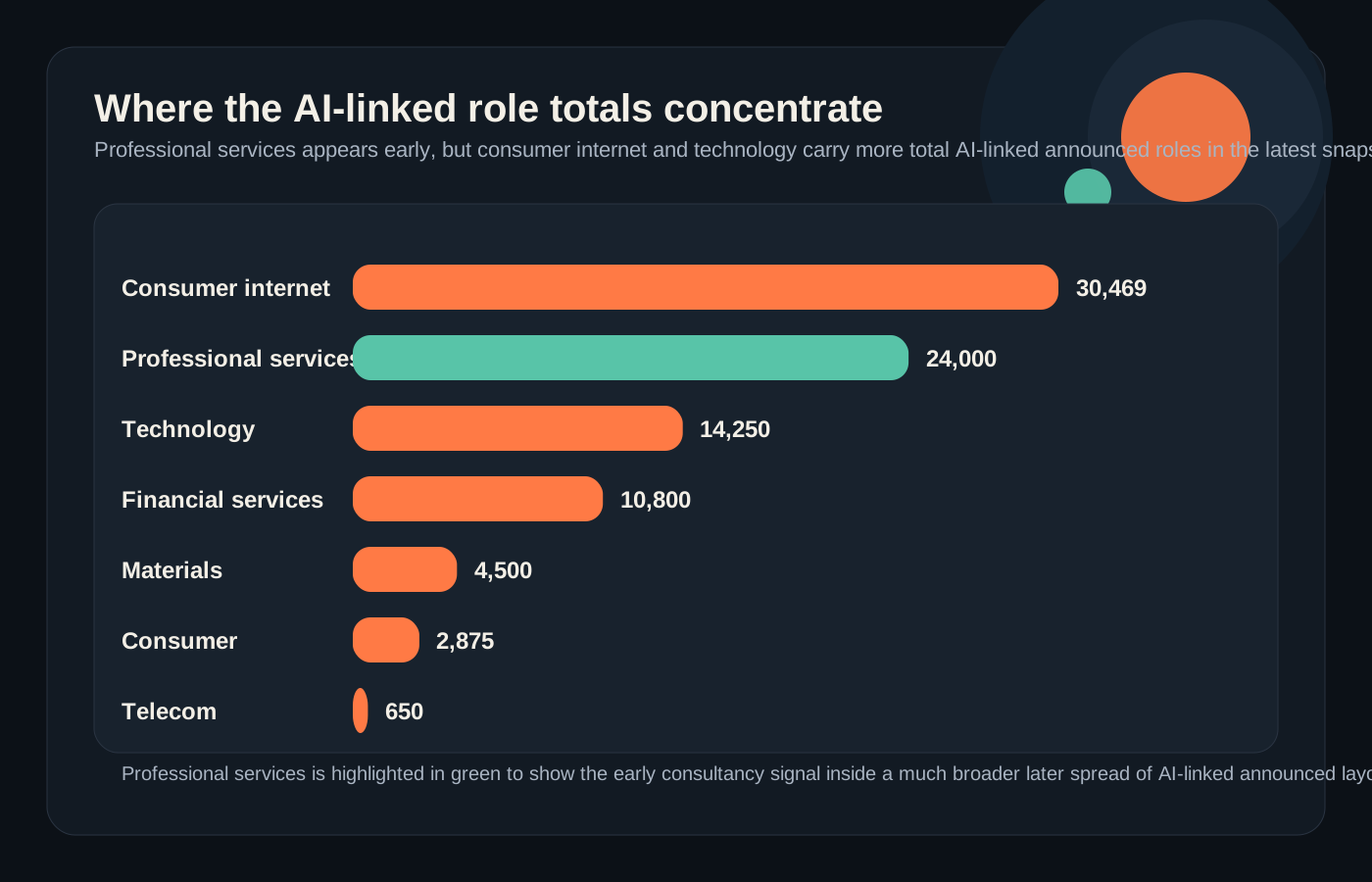
The sector mix makes that clear. By AI-linked role total, consumer internet is now the largest block in the latest snapshot, largely because Amazon and other platforms add real volume to the dataset. Professional services still matters, and its 24,000 roles remain one of the strongest early signals, but it is no longer the whole story. Technology adds another 14,250 AI-linked roles through companies such as Workday, Autodesk, WiseTech, and Atlassian. Finance contributes 10,800 through Allianz, Block, and Mizuho, where AI is framed less as a product story and more as a reason to streamline operations.
That wider mix changes the best editorial angle. The strongest version of the story is no longer "consulting is taking the hit first." The stronger claim is that consulting was one of the earliest visible places where AI-era staffing logic became public, and that logic then spread into adjacent white-collar sectors with larger overall role totals. By early 2026, executives were not just talking about AI as a future productivity gain. They were using it to defend real cuts, delayed hiring, skill resets, and flatter organizations.
That matters for how we talk about job risk. The story is still not "AI destroyed every role on this list." The more precise reading is that AI gave management a clearer language for doing what many firms already wanted to do: remove layers, eliminate lower-value work, and shift investment into AI products, AI sales, and AI-enabled operations. Once that framing became acceptable in software and consulting, it spread much more quickly across the rest of the white-collar economy and began to show up in larger monthly layoff totals.
So the latest seeded data supports a two-step narrative. First, by September 2025, consulting and IT services were already signaling that AI would change the economics of white-collar labor. Second, by early 2026, that logic had escaped consulting and become a broader corporate playbook with much larger announced role totals. That is the story worth publishing now.
Related: the AI-layoffs series
This piece is the data view of a three-part series tracking how AI moved from product pitch to staffing logic.
- Earlier, the warning signal. Before the AI Layoff Wave, Consulting Was Already Flashing Red — by September 2025, consulting and IT services already accounted for the bulk of countable AI-linked roles, even though the event count was still small.
- Next, the executive language. The Layoff Memo Has a New Word: AI — Workday, Amazon, Recruit and Klarna show how executives now cite AI directly when announcing cuts, freezes, and leaner teams.
Sources and Attribution
- Workday Form 8-K restructuring filing. Official filing used for one of the earliest explicit AI-linked staffing signals.
- Amazon CEO Andy Jassy on generative AI. Company statement used for Amazon's longer-term workforce forecast around generative AI.
- Amazon workforce reduction. Company statement used for the October 2025 round of about 14,000 corporate role cuts.
- Indeed, Glassdoor to cut 1,300 jobs amid AI integration, memo shows. Reuters reporting used for the Recruit-owned HR-tech cuts and their AI framing.
- India's new IT playbook begins with layoffs. Reuters Breakingviews column used for the Tata Consultancy Services consultancy signal.
- Accenture reports fourth quarter and full year fiscal 2025 results. Official results used for the Accenture restructuring estimate and the professional-services context.
- Factbox: Companies cutting jobs as investments shift toward AI. Reuters factbox used for late-2025 and early-2026 cross-company rows such as Amazon, Block, Meta, Mizuho, and WiseTech.
- Factbox: Corporate America continues job cuts in 2026 in efficiency push. Reuters factbox used for March 2026 rows such as Atlassian and Angi.
- Factbox: U.S. companies step up job cuts amid uncertain economy. Reuters factbox used for the late-2025 bridge period in the seeded dataset.
- Factbox: U.S. companies step up job cuts amid uncertain economy. Earlier Reuters factbox version used to cross-check the late-2025 event sequence.
Method Note
- This article uses a curated public-events dataset covering February 2025 through March 2026. It is not a full global census of all layoffs, and only rows with usable announced headcount figures are included in the countable totals.