The Layoff Memo Has a New Word: AI
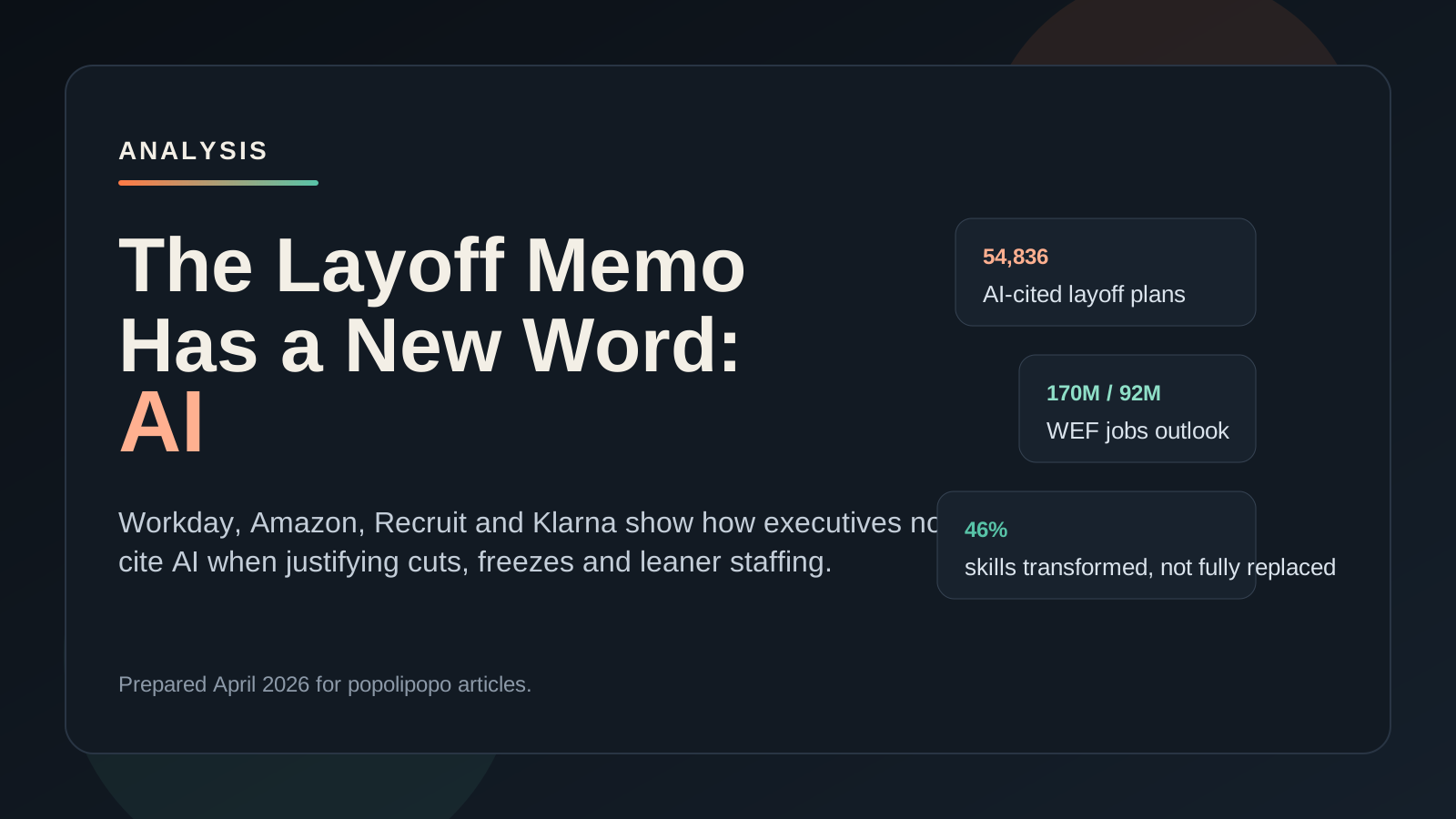
Workday, Amazon, Recruit and Klarna show how executives now cite AI to justify layoffs, hiring freezes and leaner white-collar teams.
From Workday and Amazon to Recruit and Klarna, companies are no longer selling AI only as a productivity tool. They are using it to justify cuts, freezes, and leaner staffing.
AI is no longer just a product pitch. In 2025, it became part of the language executives used to explain why teams were being cut, why backfills were disappearing, and why fewer people might be needed in parts of white-collar work.
The companies do not all say the same thing in the same way. But together they point to the same shift: AI is increasingly being described as a staffing model, not only as a productivity tool.
The clearest signals came from company statements
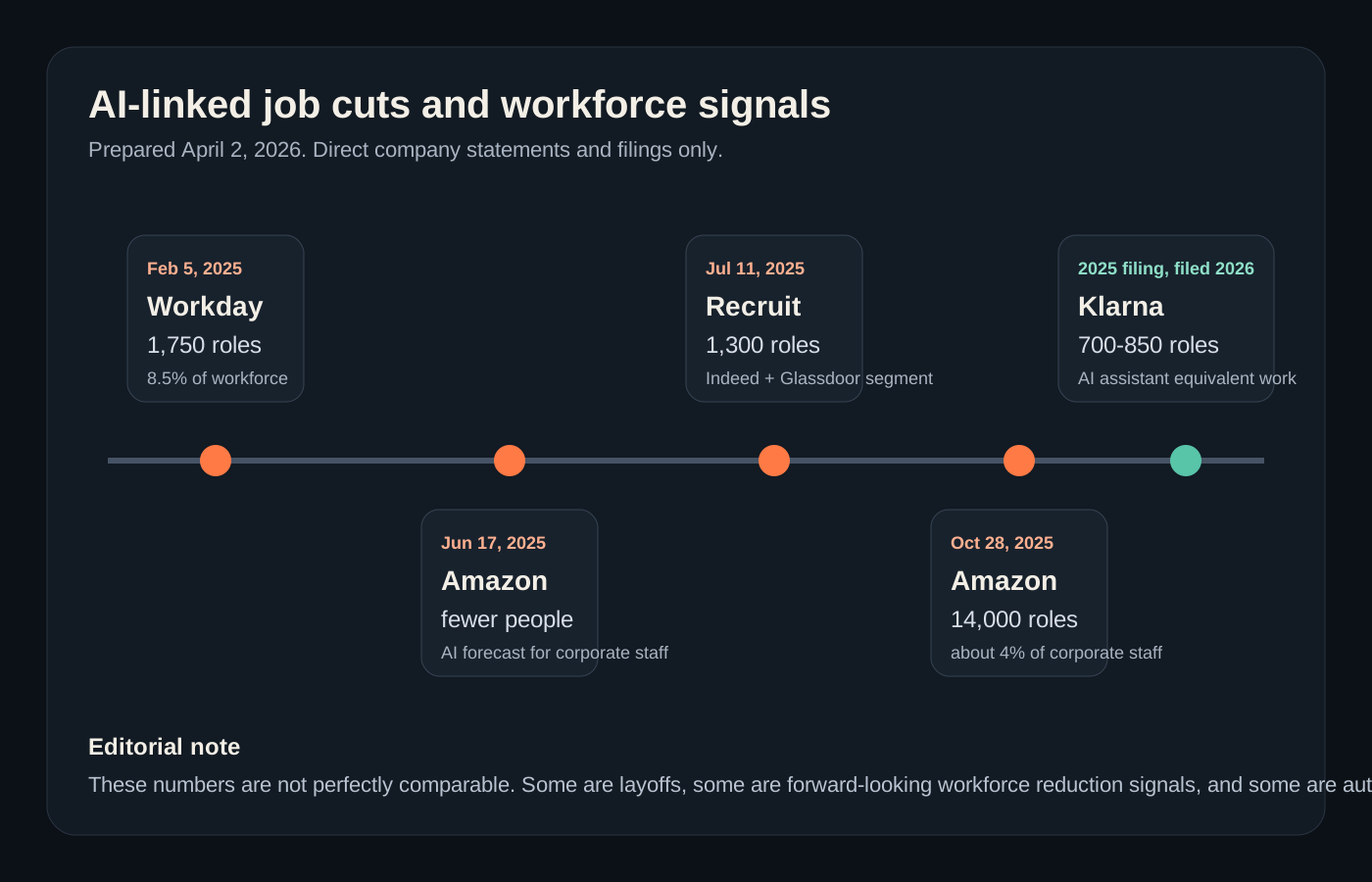
On February 5, 2025, Workday disclosed that it would eliminate about 1,750 jobs, or 8.5% of its workforce. In its filing and attached memo, the company tied the restructuring to changing demand and a stronger push into AI.
On June 17, 2025, Amazon CEO Andy Jassy told employees that more generative AI tools and agents would change how work gets done and would reduce the company’s total corporate workforce over the next few years. On October 28, 2025, Amazon said it was cutting about 14,000 corporate roles as it removed management layers and pursued efficiency gains.
On July 11, 2025, Recruit Holdings, the parent company of Indeed and Glassdoor, announced about 1,300 job cuts in its HR technology segment, roughly 6% of that workforce. The company statement confirmed the cuts. Reuters reporting added the stronger framing that the move was tied to a deeper AI push.
Klarna’s annual filing gave the most direct substitution language. The company said its AI assistant handled 80% of customer service chats during 2025 and did work equivalent to more than 700 full-time agents. Elsewhere in the same filing, Klarna said the effect was more than 850 agents when measured against the average monthly reduction in conversations handled by human staff.
What this does and does not prove
The evidence does not show that AI has already wiped out whole professions overnight. What it shows is narrower, and in some ways more important: executives now openly cite AI when they cut jobs, freeze hiring, or decide not to replace people who leave.
That pressure is strongest in work that is repetitive, text-heavy, easy to route, easy to summarize, or easy to measure in units like tickets, chats, searches, and standard workflows. Customer support, recruiting, administrative operations, and some internal knowledge work are showing the strain first.
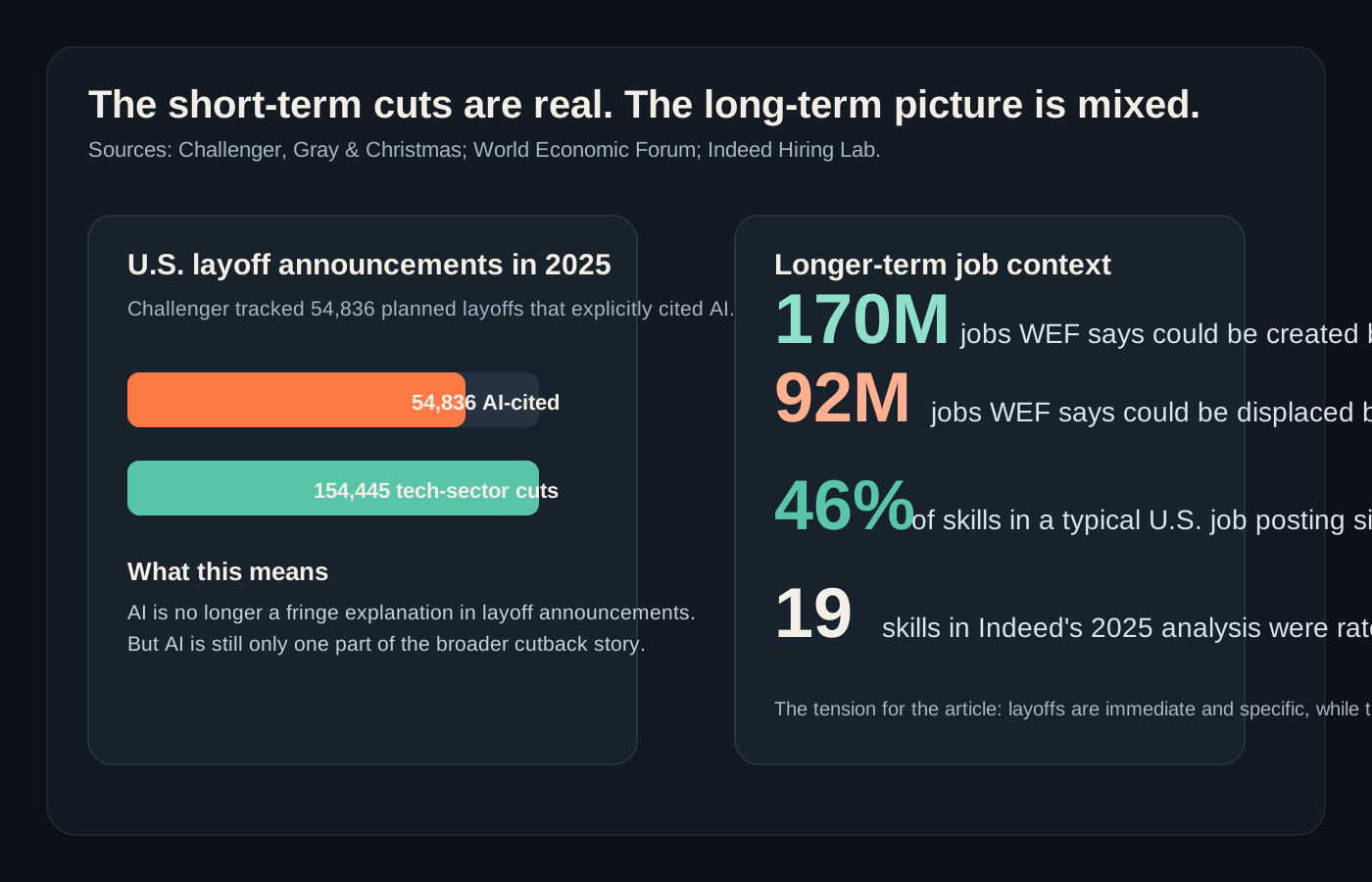
That is why the broader labor-market research matters. Indeed Hiring Lab’s 2025 AI at Work report found that 46% of skills in a typical U.S. job posting sit in hybrid or full transformation territory. But it also found that only 19 skills in its analysis looked very likely to be fully replaced. The more realistic story is not instant job extinction. It is task removal, smaller teams, and rising output expectations for the people who remain.
The macro promise does not cancel the immediate damage
Challenger, Gray & Christmas said U.S. employers announced 54,836 layoff plans in 2025 that explicitly cited AI. That does not mean AI was the only cause in every case. It does mean AI has moved into the mainstream vocabulary of workforce reduction.
At the same time, the World Economic Forum argued in January 2025 that by 2030, 170 million jobs could be created and 92 million displaced globally, leaving a net gain overall. That may be true at the macro level. But workers do not live at the macro level. They live inside the gap between the layoff memo and the hypothetical new job that may appear later.
That gap is where this story actually sits. Companies can present AI-led cuts as innovation, efficiency, or modernization. But for workers, the lived reality is more concrete: fewer entry points, fewer backfills, smaller teams, and more pressure to prove that a human role is still necessary.
The real question is how companies use the gains
Klarna is a useful caution here. After pushing hard on AI support automation, the company later acknowledged there were still harder cases that needed more skilled human agents, including fraud and identity-related work. That does not weaken the automation story. It makes it more honest.
The cleanest conclusion is this: AI is already removing some jobs, redesigning many more, and changing the standard companies use when they decide how many people they need. The question is no longer whether AI is affecting employment.
It already is.
The real question is which companies will use these gains to expand human capability, and which ones will use them to make fewer people carry more of the load.
Related: the AI-layoffs series
This piece sits inside a three-part series tracking how AI moved from product pitch to staffing logic.
- The early warning. Before the AI Layoff Wave, Consulting Was Already Flashing Red — by September 2025, consulting and IT services already dominated the countable AI-linked role total, even though the public event list was still short.
- The data view. AI Layoffs Spread Beyond Consulting — by early 2026 the seeded dataset reached 87,710 countable AI-linked roles, and the spread had moved well beyond consulting into consumer internet, technology, and finance.
Sources and Attribution
- Workday Form 8-K restructuring filing. Official filing used for the February 2025 cut of about 1,750 roles and the AI-linked restructuring language.
- Recruit Holdings newsroom announcement. Official company statement used for the Indeed and Glassdoor cuts of about 1,300 roles.
- Amazon CEO Andy Jassy on generative AI. Company statement used for the longer-term forecast that generative AI would reduce some corporate roles.
- Amazon workforce reduction. Company statement used for the October 2025 cut of about 14,000 corporate roles.
- Klarna Group plc 2025 Form 20-F. Official filing used for the AI-assistant claims around customer-service work equivalent to more than 700, and later more than 850, full-time agents.
- Indeed, Glassdoor to cut 1,300 jobs amid AI integration, memo shows. Reuters reporting mirror used for the stronger AI framing around Recruit's HR-tech cuts.
- Amazon to cut 14,000 jobs in latest layoffs. AP reporting used as independent confirmation of the October 2025 Amazon cuts and their AI-investment context.
- AI is changing call center work, but some companies are discovering they still need humans. AP reporting used for the nuance around Klarna and other support-automation cases.
- Future of Jobs Report 2025 press release. World Economic Forum source used for the macro labor-market context on job creation and displacement by 2030.
- Indeed Hiring Lab AI at Work Report 2025. Research source used for the distinction between task transformation and outright replacement.
- Challenger Report December 2025. Challenger, Gray & Christmas report used for the
54,836announced layoff plans in 2025 that explicitly cited AI.
Method Note
- This article combines direct company filings, company statements, and higher-quality reporting. It uses
AI-linked layoffs,AI-cited layoffs, orAI-framed layoffsdeliberately, because the evidence is not equally direct in every case.