How to Build a Cafe-Quality Coffee Setup at Home
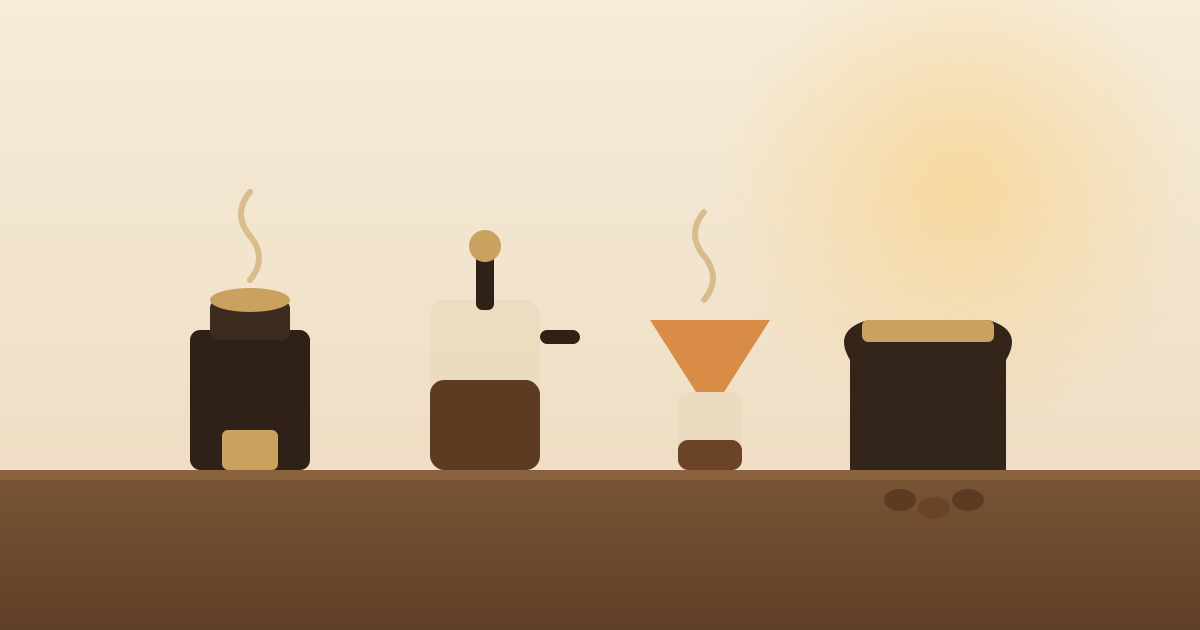
The honest guide to a home coffee setup: spend on the grinder first, match the brewer to how you actually drink, and ignore the gadgets that do nothing.
The first time I made coffee at home that was genuinely better than my neighborhood cafe, I had spent less than 200 dollars. No espresso machine, no chrome, no steam wand. A grinder, a kettle, and a paper filter. That is the part the marketing hides: most of what makes cafe coffee good is not the expensive machine in the window. It is fresh beans, an even grind, and a method that suits the drinker.
This is the guide I wish I had when I started. It is built around one idea: spend where it changes the cup, and ignore the rest. Coffee gear is full of things that look serious and do almost nothing. A short, deliberate setup will beat a cluttered, expensive one.
Spend on the grinder before anything else
If you buy one good thing, make it the grinder. Coffee starts losing flavor within minutes of being ground, and an uneven grind brews unevenly: some particles over-extract and turn bitter while others stay sour. No brewer can fix that after the fact.
The split that matters is burr versus blade. A blade grinder chops beans into random sizes, like a tiny blender. A burr grinder crushes them between two surfaces to a consistent size you can dial in. The difference in the cup is not subtle, and it is the cheapest large improvement you can make. If your budget forces a choice between a nicer brewer and a better grinder, buy the grinder and brew in something simple.
Buy whole beans and grind right before you brew. A bag of pre-ground coffee is convenient and stale by the time you open it.
Match the brewer to how you actually drink coffee
There is no single best brewer. There is the brewer that fits your taste, your patience, and your mornings. Pick honestly.
If you want a full, forgiving cup with no paper and almost no skill required, a French press is the cheapest good answer. Coarse grind, hot water, wait, press. It is hard to ruin.
If you like a cleaner, brighter cup and you enjoy the ritual, a pour-over rewards a little technique. It is the method most likely to make you say the coffee tastes like the cafe's single-origin pour. It also swings the most with your pour, which is where a scale and a steady kettle earn their place.
If you want strong, espresso-style coffee for milk drinks but do not want to manage a machine, a moka pot on the stove is remarkable value. It is not true espresso, but with good beans it makes the base for a very respectable latte.
And if you genuinely want espresso, the short shots and the microfoam that define a cafe menu, then buy an espresso machine with eyes open. It is the largest spend, it has the steepest learning curve, and it is useless without a capable grinder. Budget for the pair or skip it for now.
Fresh beans are the cheapest upgrade
People obsess over equipment and buy tired beans. Reverse that. The single most reliable way to drink better coffee tomorrow is to buy whole beans with a visible roast date and use them within a few weeks of roasting. Freshness fades fast once a bag is opened, so buy smaller amounts more often rather than a giant bag you will finish in two months.
Store beans somewhere cool and dark in an airtight container. Skip the freezer rituals and the specialty preservation gadgets. Cool, dark, sealed, and recent does almost all the work.
The extras worth buying, and the ones that are not
A few small tools genuinely help. A scale turns a lucky cup into a repeatable one, because weighing coffee and water is far more consistent than scooping. A gooseneck kettle gives you a controlled, steady pour, which matters a lot for pour-over and not at all for a French press. A milk frother lets you make a passable latte or cappuccino without a steam wand, and the heating kind does the job in one step.
Plenty of gear is not worth it. Single-use pod machines lock you into expensive, mediocre coffee. Most coffee subscriptions you will not actually keep up with. And the long tail of branded accessories, the tampers and distributors and bottomless gadgets, only matters once you are deep into espresso and chasing the last few percent. For everyone else, they are decoration.
A simple plan by budget
If you have around 50 to 80 dollars, buy a modest burr grinder and a French press, and spend the rest on fresh beans. That alone will outperform most cafes on a per-cup basis.
If you have 150 to 250 dollars, get a better burr grinder, add a pour-over set with a scale, and a gooseneck kettle if you like brewing by hand. This is the sweet spot for most people, and the point past which spending more buys convenience, not flavor.
If you are committed to espresso and milk drinks, plan to spend the most and to practice. Buy the machine and a grinder capable of espresso-fine, even grinding as a single budget, not as separate impulse purchases months apart.
The pattern through all three tiers is the same. The grinder and the beans do the heavy lifting. Everything else is about matching the method to the person holding the cup. Start small, drink the results for a few weeks, and only then add the next piece.
What to buy and where it fits
As an Amazon Associate, House of Agile earns from qualifying purchases. Prices and availability change, so check the current listing before buying.
The grinder and the beans do most of the work; everything else is about matching the method to how you actually drink coffee. Here is the gear by job, cheapest lever first.
- Burr grinder (Grinder). Best for: The single biggest upgrade: an even grind that every brew method depends on. Buy this before a fancier brewer. In short: noise moderate; small countertop unit. Watch out: Avoid cheap blade grinders; they chop unevenly and flatten the flavor. Compare options on Amazon
- French press (Immersion brewer). Best for: The cheapest path to a fuller, cafe-style cup. Forgiving, no paper filters, hard to get badly wrong. In short: noise silent; small. Watch out: Needs a coarse, even grind, so it really wants a burr grinder alongside it. Compare options on Amazon
- Pour-over set (Drip brewer). Best for: A cleaner, brighter cup with more control, for people who enjoy the ritual of brewing by hand. In short: noise silent; very small. Watch out: Results swing with technique; pairs best with a scale and a gooseneck kettle. Compare options on Amazon
- Moka pot (Stovetop brewer). Best for: Strong, espresso-style coffee on the stove without an espresso machine. Great value for milk drinks. In short: noise silent; very small. Watch out: Not true espresso pressure; easy to scorch if you walk away from the stove. Compare options on Amazon
- Espresso machine (Espresso machine). Best for: Real espresso and the milk drinks most cafes sell, if you genuinely want that ritual and will dial it in. In short: noise moderate to high; large countertop unit. Watch out: The biggest spend, and useless without a good grinder; budget for both together. Compare options on Amazon
- Gooseneck kettle (Kettle). Best for: Controlled, steady pouring for pour-over, plus temperature control on variable-temp models. In short: noise silent; small. Watch out: Mostly matters for pour-over; skip it if you only use a French press or moka pot. Compare options on Amazon
- Coffee scale (Scale). Best for: Consistency: weighing coffee and water turns a lucky cup into a repeatable one. In short: noise silent; tiny. Watch out: A basic kitchen scale works; a built-in timer is a nice-to-have, not a need. Compare options on Amazon
- Milk frother (Milk frother). Best for: Cafe-style lattes and cappuccinos at home without a steam wand. In short: noise low; tiny. Watch out: Handheld wands froth but do not heat; get a heating frother if you want it all in one step. Compare options on Amazon
This article is independent practical analysis by House of Agile. It reflects widely accepted home-brewing practice and the author's own experience, not professional or dietary advice. Product suggestions are general categories, not endorsements of specific brands.
Sources and Method
This is a practical buying guide built from widely accepted home-brewing practice and the author's own experience, not from a single study or dataset. It makes no hard statistical claims; the advice is qualitative and reflects mainstream specialty-coffee consensus on grind consistency, freshness, and brew-method trade-offs.
- Specialty Coffee Association, general resource on coffee standards and brewing. https://sca.coffee
Method note: the article deliberately avoids precise numeric claims (extraction percentages, exact freshness windows) because those vary by bean, method, and taste. Where a specific figure would be needed, the guide gives a range or a direction instead. The product section lists gear categories, not tested model recommendations.