Is Coffee Good For You? Benefits, Risks, And Environmental Costs
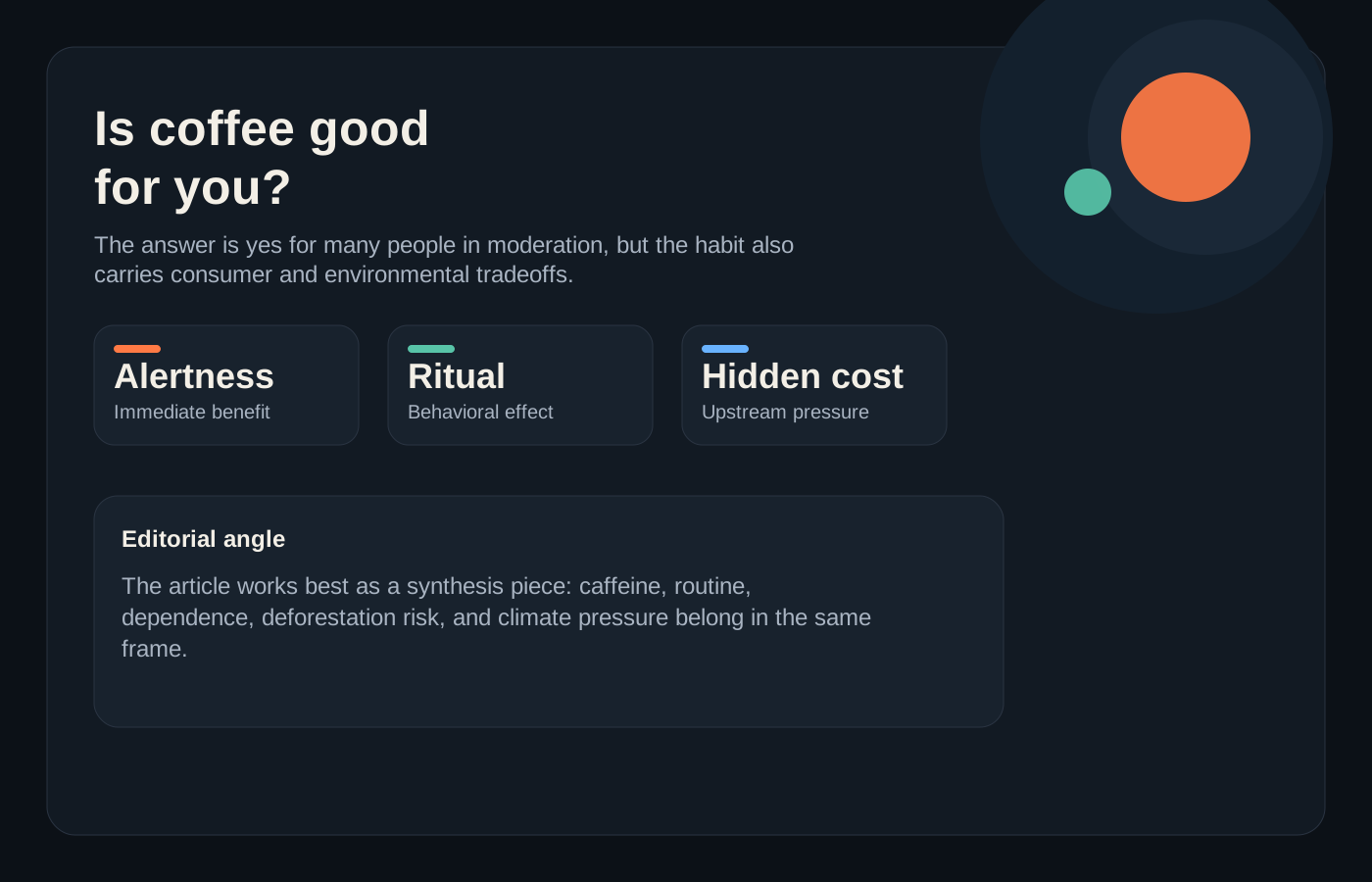
By December 2025, coffee looked less like a simple stimulant and more like a ritual technology with real benefits, real tradeoffs, and an upstream ecological cost.
Coffee is one of the rare consumer products that can feel beneficial, social, and refined at the same time. It wakes people up, structures the day, improves the experience of work and conversation, and anchors habits that many people experience as stabilizing. That helps explain why coffee culture has grown so quickly. But the category also carries real drawbacks, both for consumers and for the producing regions upstream. The benefits are tangible. So are the blind spots.
Why People Keep Coming Back
Part of coffee’s appeal is pharmacological. Caffeine improves alertness, fights fatigue, and gives a reliable shape to the morning. Part of it is behavioral. Preparing or buying coffee creates a small repeated ritual. For many people, the drink is inseparable from the sequence around it: leaving the house, ordering, waiting, sitting down, opening a laptop, or pausing between tasks.
The coffee shop adds another layer. Moderate ambient noise, smell, light social contact, and a relatively low-pressure environment can help people feel more focused and less trapped than they do either at home or in a stricter office setting. That is one reason coffee consumption often becomes inseparable from place consumption. People are not only buying caffeine. They are buying a condition for attention.
The Benefits Are Real, But So Are The Limits
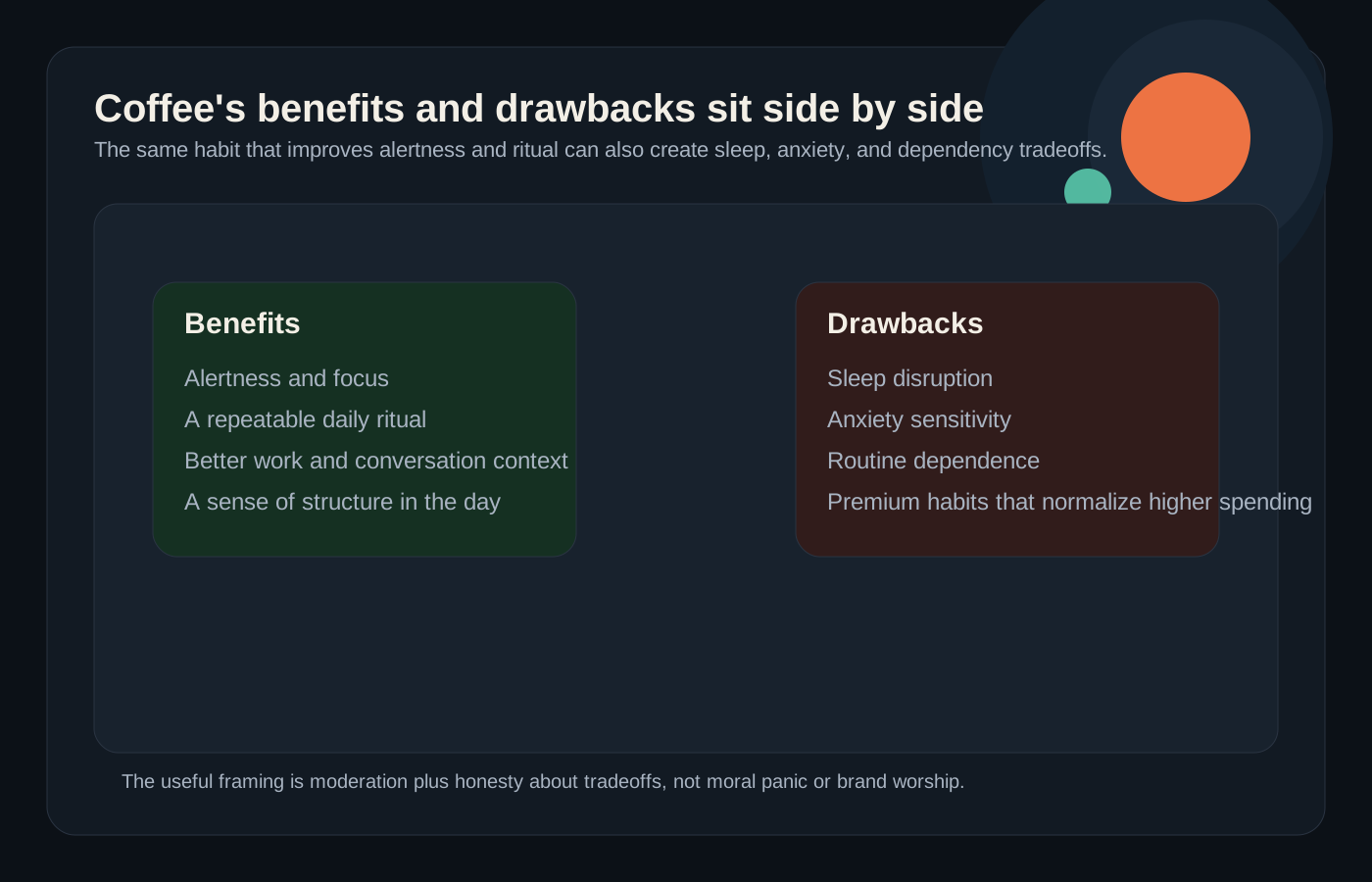
That does not make coffee neutral. The same product that gives structure to one person’s day can become compulsion for another. The benefits of moderate intake do not erase common drawbacks:
- disrupted sleep
- dependence on routine caffeine use
- anxiety sensitivity in some consumers
- overpayment for convenience and environment
- substitution of a ritual for deeper forms of rest or social connection
Coffee culture also tends to naturalize premium consumption. A six-euro cappuccino can feel ordinary when it is wrapped in good design, social validation, and habit. That matters because coffee’s role in daily life can blur the line between pleasure, need, and identity performance.
The Upstream Blind Spot
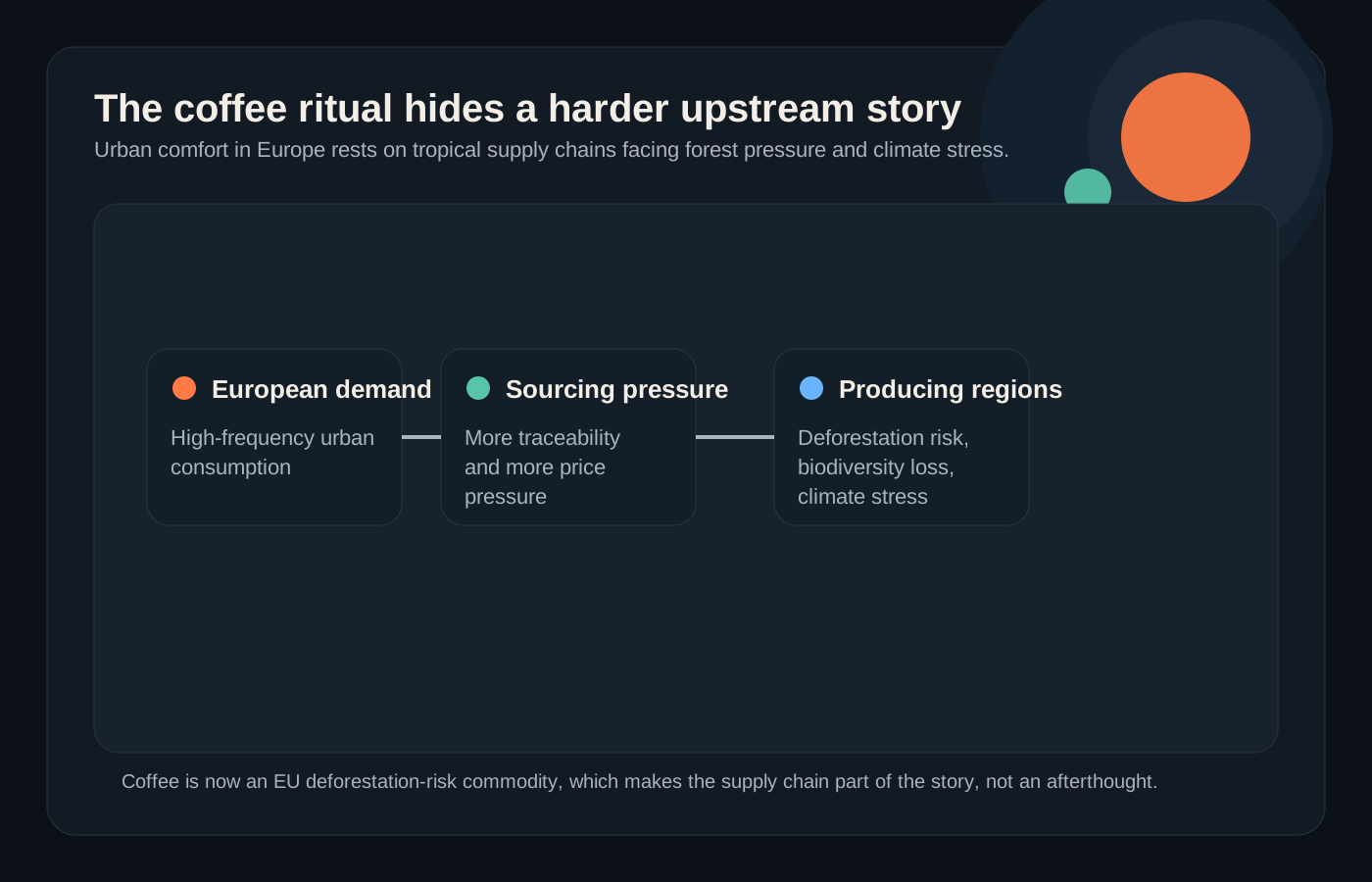
The harder drawback sits much farther away from the cup. Coffee is largely consumed in richer urban markets but grown in tropical landscapes that are under rising environmental and economic pressure. The European Commission now treats coffee as a deforestation-risk commodity under its deforestation-free products regulation. That alone changes the tone of the conversation. Coffee is not just a lifestyle marker. It is also part of a land-use debate.
The strongest version of the problem is not that every coffee farm equals forest destruction. The real issue is structural. Coffee expansion and intensification can contribute to biodiversity loss and forest pressure, especially where shaded or agroforestry systems are replaced by more exposed production models. At the same time, climate stress is making many coffee-growing regions less stable. Yields, quality, and farm economics are becoming more fragile even as demand remains high.
A More Honest Coffee Culture
None of this means coffee should be treated as a guilty pleasure that people are expected to renounce. That would be unserious. Coffee’s benefits are obvious, and its social role is real. But a more mature coffee culture would stop pretending that the category is only about taste, focus, or design.
It would acknowledge two things at once. First, coffee has become a useful ritual technology for modern urban life. Second, its normalization in Europe depends on a supply chain whose ecological cost is too easy to hide. The category works precisely because it makes everyday life feel smoother. The challenge is that the smoothness is partly built on environmental and economic frictions pushed elsewhere.
If coffee has become part of your daily ritual, it is worth doing well at home too. Here is how to build a cafe-quality coffee setup, and where the money actually matters.
Sources and Method
https://environment.ec.europa.eu/topics/forests/deforestation/regulation-deforestation-free-products_en
https://www.consilium.europa.eu/en/press/press-releases/2023/05/16/council-adopts-new-rules-to-cut-deforestation-worldwide/
https://www.fao.org/family-farming/detail/en/c/1619095/
https://www.nature.com/articles/d41586-023-03019-0.pdf
https://link.springer.com/article/10.1007/s10584-019-02538-y
- European Commission, Regulation on Deforestation-free Products:
- Council of the EU,
Council adopts new rules to cut deforestation worldwide, May 16, 2023: - FAO,
Shade-grown coffee: - Nature,
Coffee’s legacy: almost 300 years of deforestation: - Climatic Change review on coffee and climate:
Method note:
This article combines consumer-behavior interpretation with institutional and scientific sourcing on upstream environmental pressure.