Why Are Coffee Shops Growing So Fast In Europe?
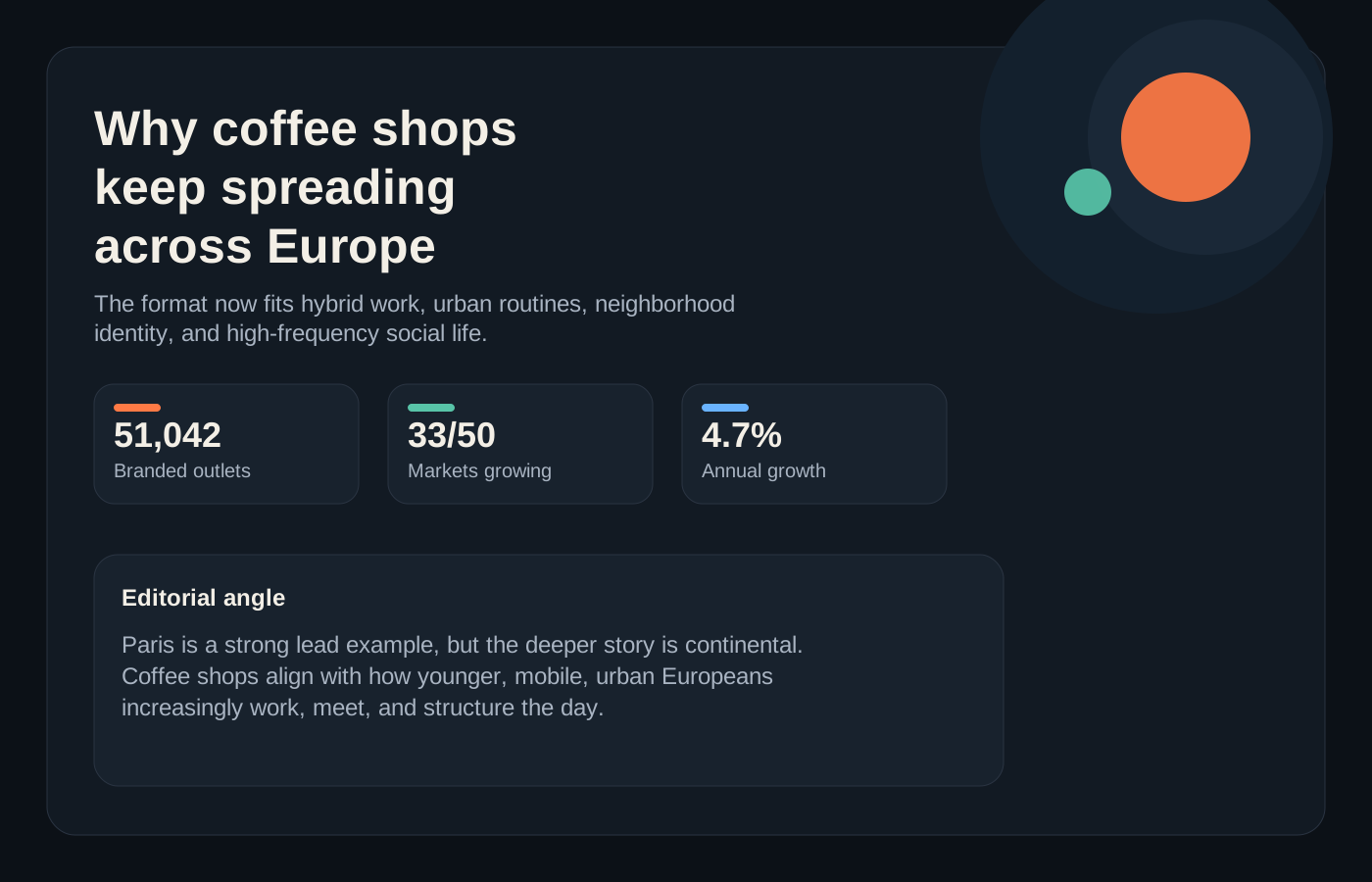
By late 2025, coffee-shop growth across Europe looked less like a niche specialty trend and more like a demographic and urban-behavior shift.
Coffee shops are no longer a niche urban accessory. Across Europe, they are becoming standard pieces of city infrastructure, especially in neighborhoods shaped by mobile work, dense foot traffic, and younger professional populations. Paris makes that shift easy to see, but it is not the only place where the format is evolving quickly. The larger pattern is continental: coffee shops are spreading because they answer a demographic and behavioral change, not just a taste preference.
A European Expansion, Not A Local Curiosity
The best current continent-level snapshot comes from World Coffee Portal. Its 2025 European summary says the branded coffee-shop market reached 51,042 outlets, up 4.7% year on year, with 33 of 50 tracked markets expanding. That matters because it moves the discussion away from anecdotes. Coffee-shop growth is not limited to one influencer-heavy capital. It is visible in mature markets, fast-growth markets, and hybrid markets where chains and independents grow side by side.
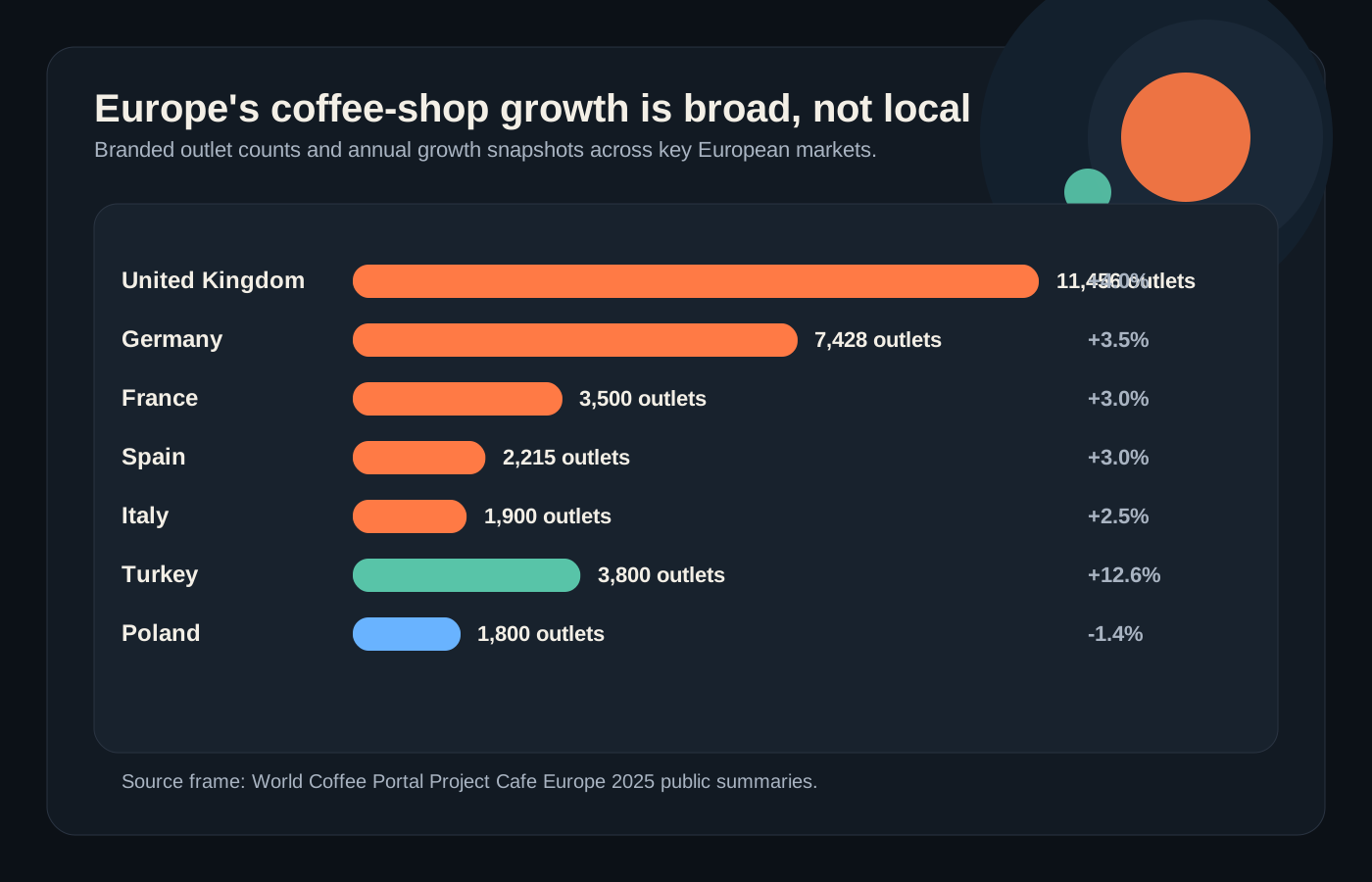
The United Kingdom remains the biggest branded market in Europe, which is important because it shows that even a mature market keeps adding stores. Germany follows as a large-scale market where specialty demand has not disappeared inside mainstream growth. France continues to expand, and Spain has combined chain growth with a more visible specialty wave in Madrid and Barcelona. Turkey stands out for rapid branded growth despite high inflation, while Poland is a reminder that the model is not invincible everywhere.
Why The Format Fits This Moment
The demographic logic is stronger than the coffee logic. Europe’s coffee-shop growth maps well onto several structural shifts:
- more hybrid and remote work
- more solo knowledge work in public
- more demand for low-friction social spaces
- more urban identity built around small recurring rituals
- more willingness to pay for atmosphere, not just utility
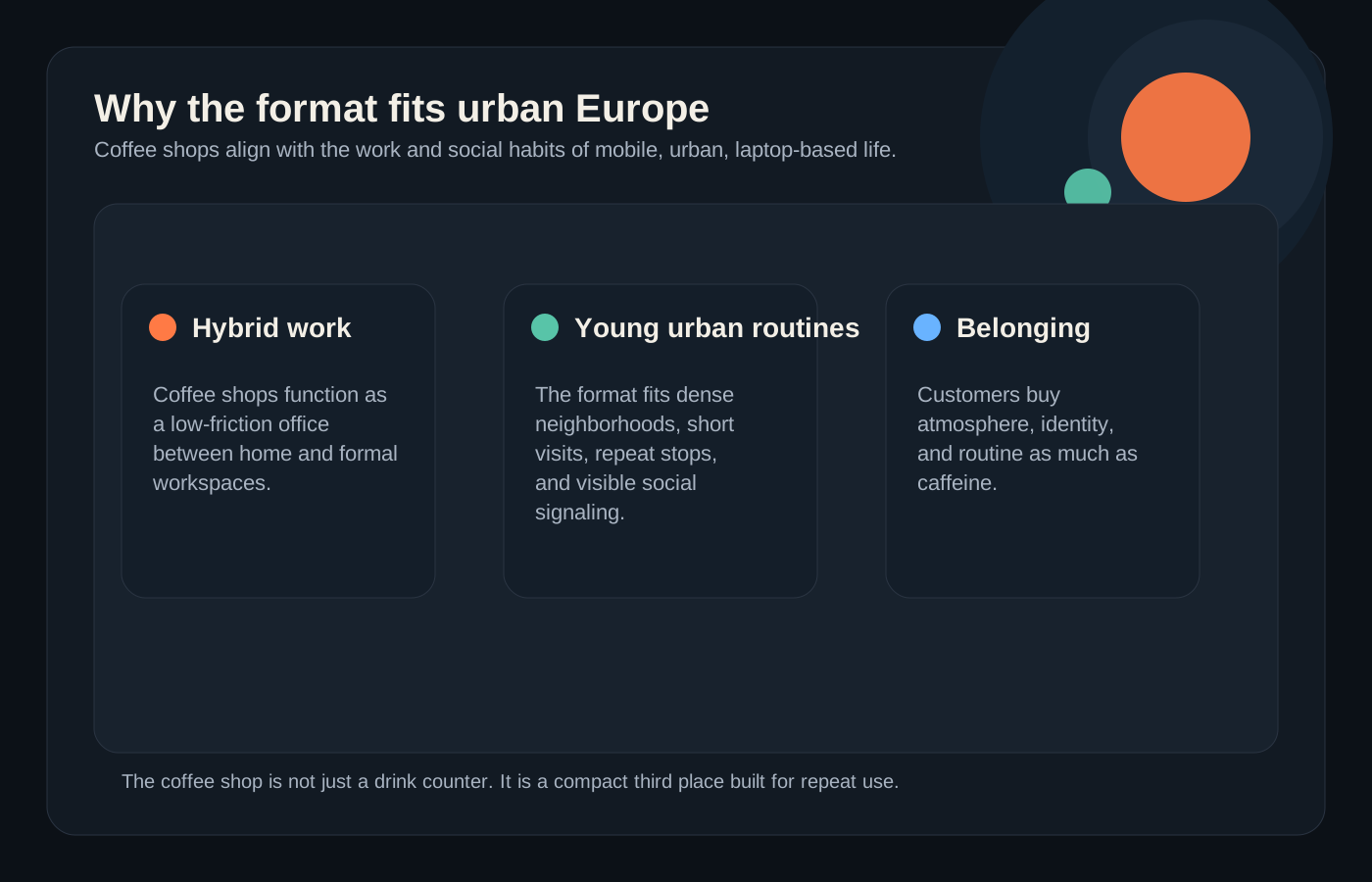
For younger urban professionals, students, freelancers, and internationally mobile workers, the coffee shop functions as a flexible third place. It is neither home nor office, but it can borrow from both. That makes it unusually efficient. A single venue can serve as meeting point, laptop desk, dating venue, waiting room, status signal, and small private refuge.
Paris As A Compressed Example
Paris turns the pattern up to full volume. The city compresses density, walkability, visual signaling, and neighborhood competition into a small urban map. That makes every new format easier to notice. Specialty coffee in Paris has not erased the old cafe tradition. It has layered a new set of expectations on top of it: better sourcing, more explicit design, stronger laptop compatibility, and a more internationalized social code.
That matters because the coffee shop is no longer only selling a drink. It is selling an environment with readable cues. The cup matters, but so do the furniture, lighting, soundtrack, roasting story, and customer mix. Demographically, this is not only about age. It is about lifestyle alignment: people who want spaces that feel productive, legible, and socially adjacent without being demanding.
The Real Product: Belonging With Structure
What coffee shops increasingly sell is a structured form of belonging. They offer enough public life to reduce isolation, but enough personal control to remain comfortable. That balance is difficult to reproduce. It is one reason the format works so well across cities with different cafe traditions.
The most useful way to read the growth of coffee shops, then, is not as a simple specialty-food story. It is a story about the rise of a venue type that fits the rhythms of post-office urban life. Europe is not just drinking more coffee in better places. It is building more spaces designed around how contemporary city dwellers want to spend their time.
If that environment is what draws you in, you can build a surprising amount of it at home. Here is how to put together a cafe-quality coffee setup without the cafe markup.
Sources and Method
https://www.worldcoffeeportal.com/news/fastest-growth-in-five-years-for-the-european-branded-coffee-shop-market/
https://www.worldcoffeeportal.com/analysis/the-ecs-coho-series-the-spanish-branded-coffee-shop-market-in-focus/
- World Coffee Portal,
Fastest growth in five years for the European branded coffee shop market, April 3, 2025: - World Coffee Portal,
The ECS + COHO Series: The Spanish branded coffee shop market in focus, July 4, 2025:
Method note:
This article uses Europe’s branded coffee-shop market as the main quantitative frame and treats Paris as the lead urban example rather than as the sole source of evidence.