Why Coffee Shops Are Still Growing: The Economics Behind Europe’s Boom
By January 2026, Europe’s coffee-shop boom looked less like a simple beverage trend and more like a durable business model built on habit, margin, and repeat visits.
Coffee shops are spreading across Europe because the unit economics of the category remain attractive enough for several kinds of operators at once. Chains, independents, bakery-cafes, fast-food coffee hybrids, and brand-owned cafes are all using the format differently, but they are all buying into the same core idea: coffee is one of the simplest ways to monetize time, repeat visits, and physical atmosphere.
A Market Still Getting Bigger
World Coffee Portal’s 2025 Europe summary says the branded coffee-shop market reached 51,042 outlets and recorded its fastest net outlet growth in five years. That matters because it shows the format is still expanding even under inflation, elevated input costs, and pressure on consumers. Growth is not uniform, but the overall market signal is strong: coffee remains one of the most durable urban hospitality categories in Europe.
Part of that durability comes from frequency. People do not buy coffee the way they buy fashion or furniture. They buy it repeatedly, sometimes daily. That gives the category a revenue rhythm many other consumer experiences would like to have.
Why Chains Keep Opening Stores
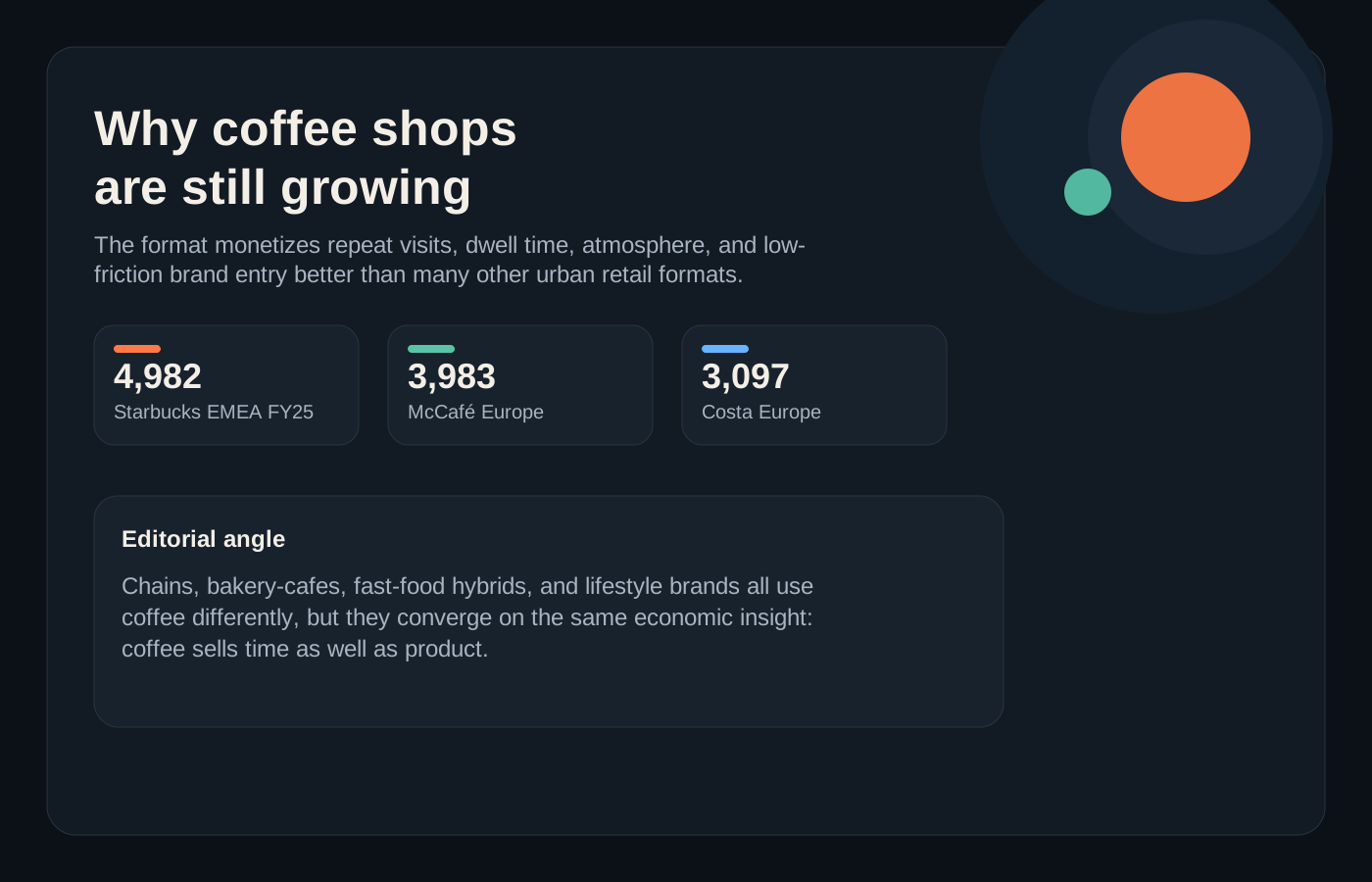
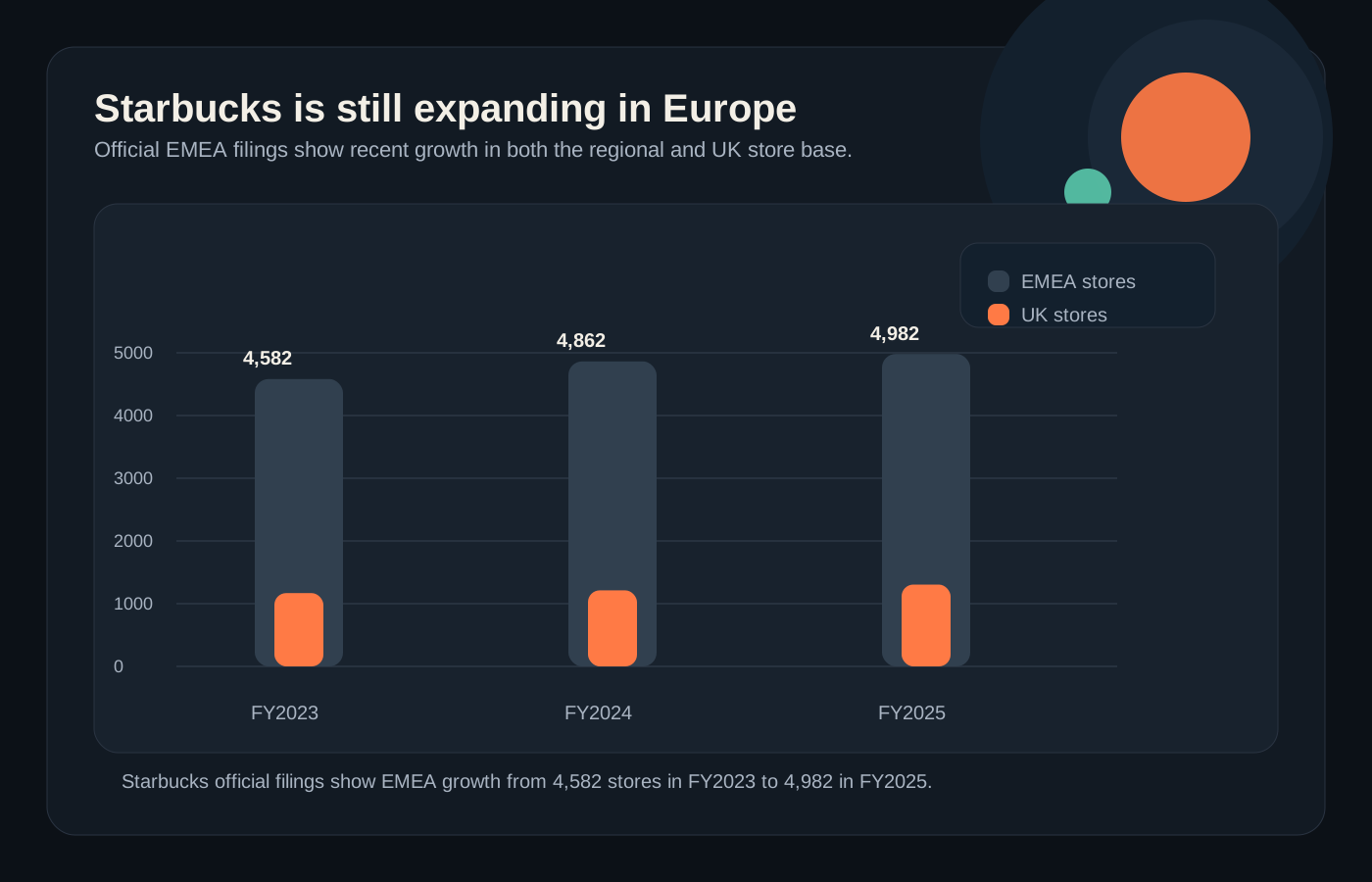
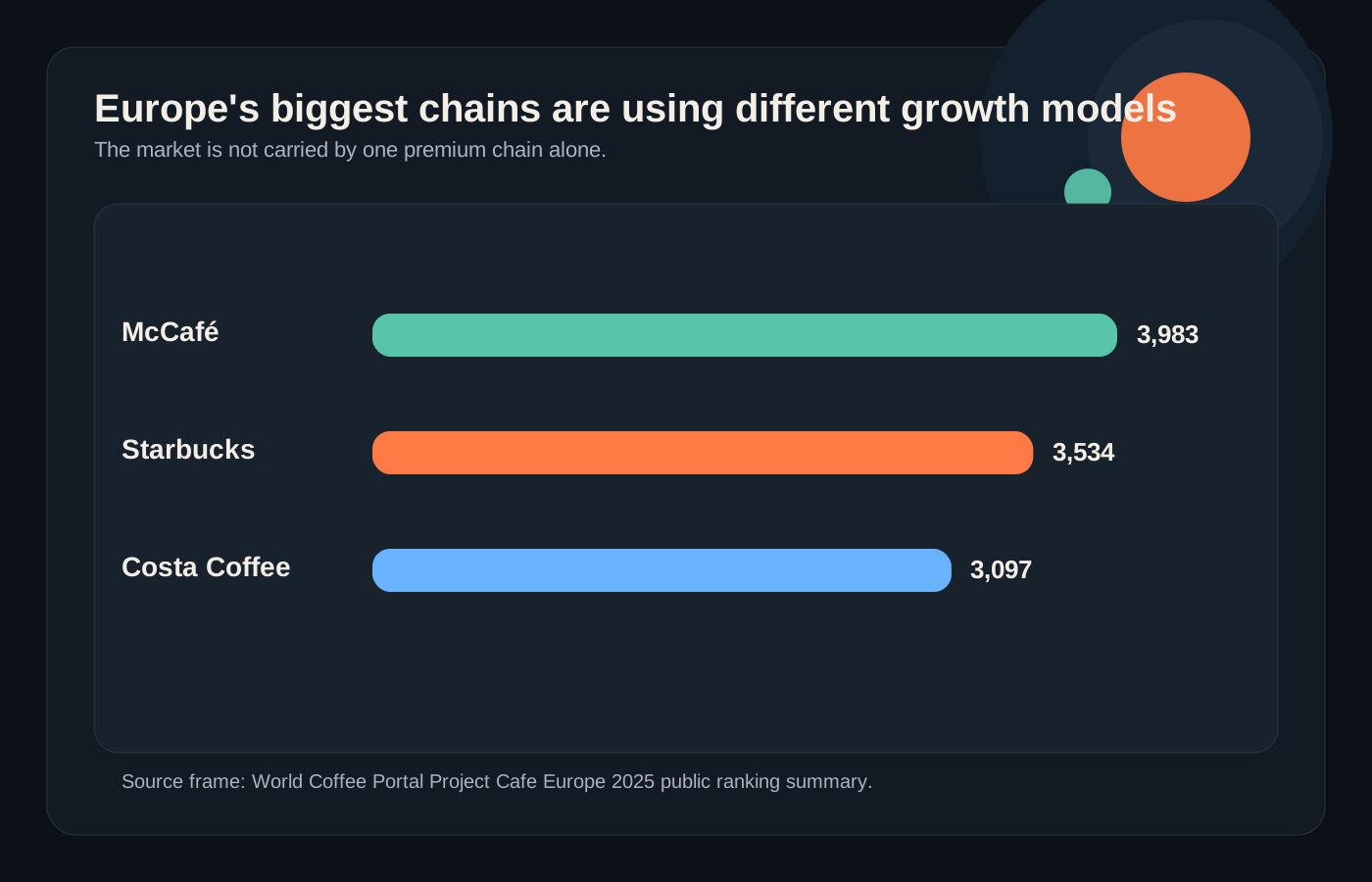
The main chains are still growing because coffee lets them capture both product margin and dwell time. Starbucks’ own EMEA filings show its regional store base rising from 4,582 in fiscal 2023 to 4,982 in fiscal 2025. In the UK alone, Starbucks grew from 1,168 to 1,304 stores over the same period and says it added more than 500 stores over the last five years. World Coffee Portal’s 2025 ranking places McCafé first in Europe with 3,983 outlets, Starbucks second with 3,534, and Costa Coffee third with 3,097.
That ranking matters because it reveals several economic playbooks operating in parallel:
- fast-food networks using coffee as a high-frequency traffic driver
- branded specialists using coffee as a premium everyday habit
- bakery and lunch formats using coffee to extend basket size
- lifestyle brands using cafes to monetize brand experience indirectly
The category is not dominated by one business model because coffee is unusually adaptable. It can be a destination purchase, an add-on purchase, or a brand-immersion purchase.
Why Non-Coffee Brands Care
Luxury, fashion, retail, and even banking brands have been moving into cafe formats because the coffee shop is one of the cheapest ways to make a brand physically inhabitable. A branded cafe slows the customer down, gives them a reason to enter without committing to a high-ticket purchase, and increases time spent inside the brand’s universe.
That is why coffee matters economically beyond the cup. It creates a low-barrier entry point into higher-value relationships. A customer may not buy a luxury bag, open a premium financial product, or furnish an apartment on the first visit. But a coffee purchase can still turn a brand from abstraction into environment.
Why The Format Feels So Defensible
Coffee’s economics are also cultural economics. The product itself is inexpensive relative to the price consumers will accept when atmosphere, ritual, and convenience are bundled together. That gives operators room to price for location, design, service, and identity instead of competing only on beverage function.
This does not mean the category is easy. Rent, labor, green-coffee prices, and consumer fatigue all matter. Some markets will contract, and some store footprints will fail. But the broader economic logic remains attractive because coffee sits at the intersection of habit, margin, and repeatability.
The Better Economic Reading
The European coffee-shop boom is not only a story about people wanting better coffee. It is a story about a format that monetizes repeat visits, makes physical brands more tangible, and sells high-frequency comfort inside dense urban life. The coffee shop works economically because it sells more than product. It sells a reason to stay.
If you would rather capture some of that value yourself, the home version is far cheaper than a daily habit. Here is how to build a cafe-quality coffee setup that beats most cafes per cup.
Sources and Method
https://www.worldcoffeeportal.com/news/fastest-growth-in-five-years-for-the-european-branded-coffee-shop-market/
https://stories.starbucks.com/emea/stories/2024/starbucks-files-uk-and-emea-accounts-for-the-fiscal-year-ended-october-2023/
https://stories.starbucks.com/emea/stories/2026/starbucks-uk-and-emea-accounts-fiscal-year-ended-september-2025/
https://stories.starbucks.com/emea/stories/2024/starbucks-23-5-degrees-in-the-uk/
https://www.cateringtoday.co.uk/news/cafes-and-coffee-shops/caffe-nero-reports-record-sales-of-626m-amid-year-of-expansion/
https://www.gcrmag.com/pret-a-manger-records-sales-rise-in-fy2024/
- World Coffee Portal,
Fastest growth in five years for the European branded coffee shop market, April 3, 2025: - Starbucks Stories EMEA, FY23 accounts:
- Starbucks Stories EMEA, FY25 accounts:
- Starbucks Stories EMEA, 23.5 Degrees acquisition:
- Caffè Nero summary coverage:
- Pret summary coverage:
Method note:
This article combines official Starbucks filings with broader European chain-market reporting and selected trade-press summaries for adjacent chains.