Box Fan vs Desk Fan: When Smart Placement Beats Size
A well-placed desk fan can compete with a poorly placed box fan, but fan size still matters once placement, intake, and shrouding are solved.
A box fan looks like the obvious tool for window ventilation. It is wide, square, and close to the shape of many window openings. A desk fan looks like a compromise.
The useful surprise from the airflow experiment is narrower than that: a smaller fan placed well can move as much air through the house as a larger fan placed badly.
That does not mean fan size is irrelevant. It means size cannot rescue a poor airflow path.
The fair comparison is not just fan versus fan
When people compare a box fan and a desk fan, they usually compare blade size, motor power, or advertised airflow. Whole-house ventilation depends on more than the fan:
- Is the fan blowing in or out?
- Is there a separate intake window?
- Is the fan pressed against a screen?
- Is air recirculating near the edges?
- Is the window opening large enough?
- Are curtains, blinds, or furniture blocking the path?
- Is the fan shrouded or sealed?
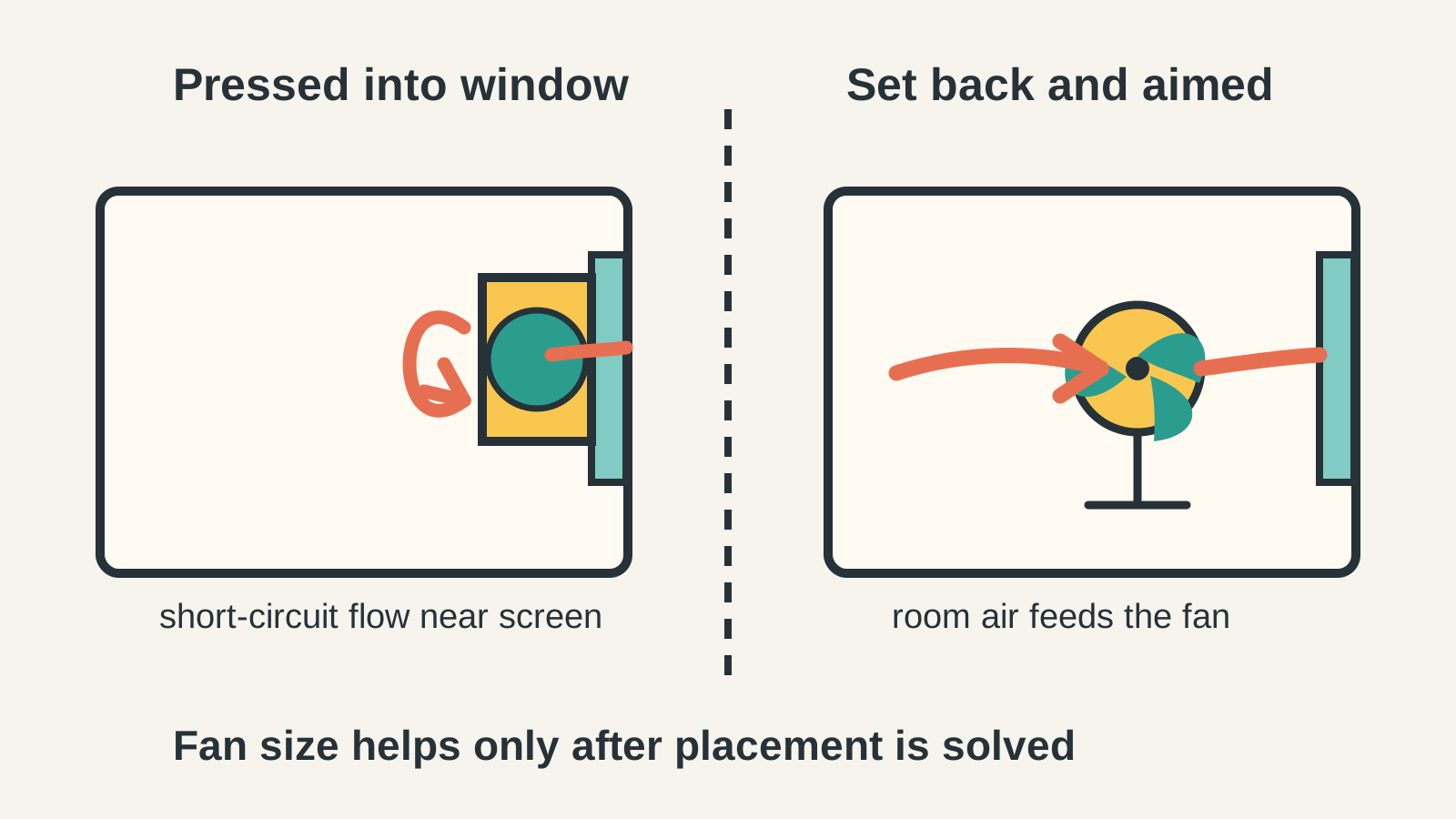
A box fan pressed into a screened window can churn air near the opening without pulling as much air from the room. A smaller fan set back from the opening can entrain room air and throw a cleaner jet through the window.
That is why placement can beat size in a real room.
What the experiment actually supports
In the transcript, the box fan performed worse when it was right against the screen than when it was moved away. The smaller fan, placed several feet back and aimed outward, moved about as much air through the house as the larger box fan in the window.
The careful wording is important:
A well-placed desk fan can match a poorly placed box fan. It does not generally beat an optimized box fan.
If both fans are pulled back, aimed well, and given a clear intake path, the larger fan should usually have more capacity. If the box fan is mounted in a well-fitted panel or shroud that prevents leakage and recirculation, it may also work well directly at the window.
Why box fans can waste airflow at windows
Box fans are convenient, but they do not move air uniformly across the whole square frame. Research on box fans used in DIY air cleaners shows that shrouds can improve useful flow, partly because the flow pattern around the fan is uneven.
At a window, the same idea matters. A loose box fan can:
- Pull air around its edges.
- Leak air through gaps between the fan and window frame.
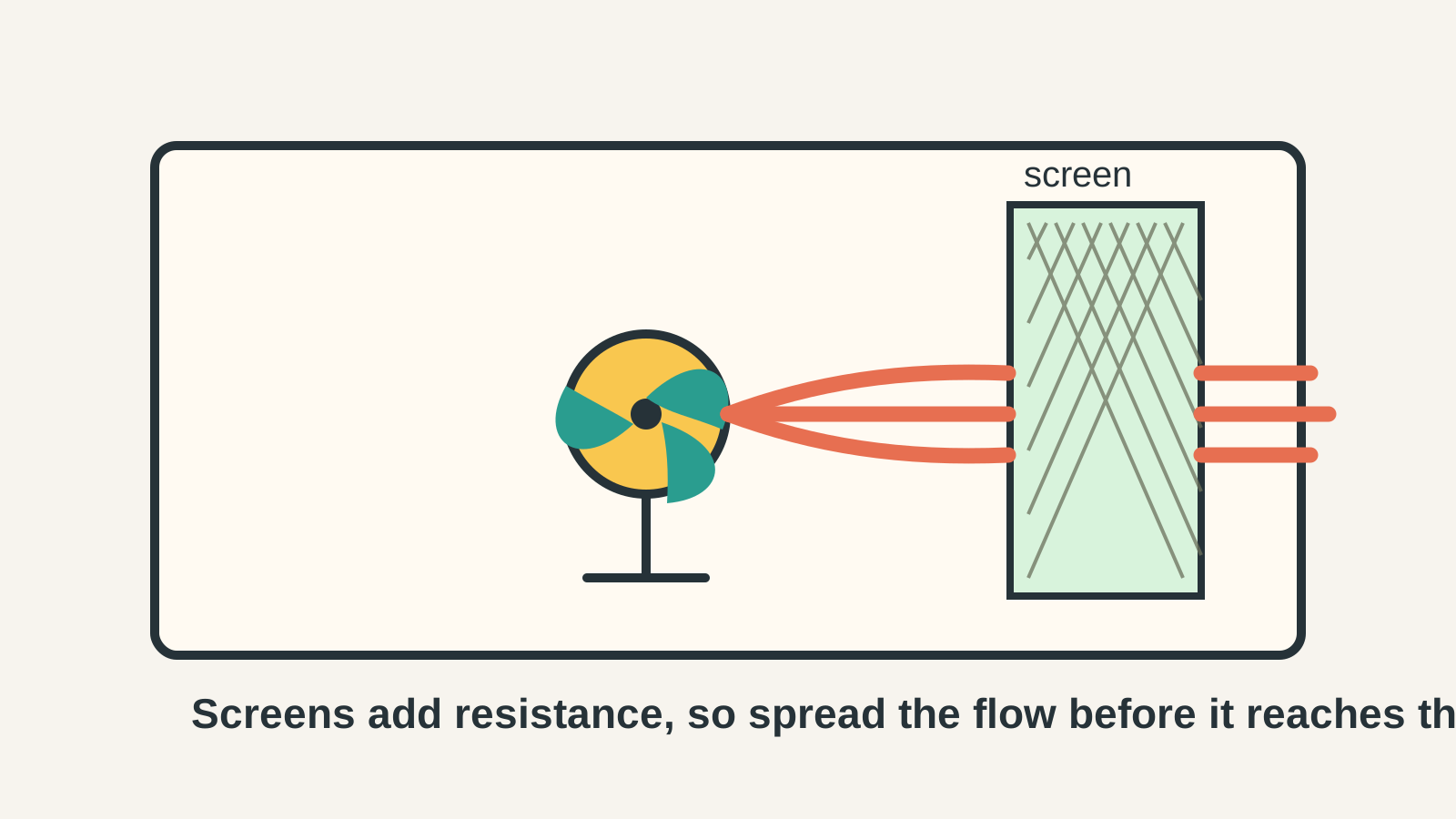
- Push a high-speed patch through a restrictive screen.
- Recirculate some recently exhausted air near the opening.
A shroud or panel can reduce those losses. Even a simple cardboard baffle can help if it blocks obvious leaks and guides the flow through the opening.
When a box fan is the better choice
A box fan is still the better tool when the setup lets it use its size:
- It has a clear intake path from another window or room.
- It is not blocked by a tight screen or heavy curtain.
- It is sealed or shrouded enough to avoid edge recirculation.
- It can sit back from the window while still aiming through the opening.
- Noise, power use, and safety are acceptable.
If you want maximum night flushing and have the space, try the box fan pulled back 0.5 to 1.5 m from the exhaust window first. Then compare it to the flush position.
When a desk fan is good enough
A desk fan can be the better practical choice when:
- The window opening is small.
- A box fan cannot be aimed cleanly.
- You need less noise.
- You are ventilating one room rather than a whole house.
- You can place it back from the window and point the jet cleanly outward.
The key is not that the desk fan is magic. The key is that it has room to pull indoor air and send it through the opening.
The test before you buy another fan
Before buying a bigger fan, test your current one.
- Open an intake window elsewhere.
- Put the fan directly in or against the exhaust window, blowing out.
- Check airflow at the intake with tissue, smoke, or your hand.
- Move the fan 0.5 m inside and aim it outward.
- Try 1.0 to 1.5 m if the room allows it.
- Clear curtains and screen dust.
- If using a box fan, test whether sealing obvious side gaps improves the pull at the intake window.
If the intake window pulls harder after moving or shrouding the fan, the old setup was the problem.
Quick answers
Is a box fan better than a desk fan for window airflow? Usually, if both are set up well. But a poorly placed box fan in a screened window can underperform a smaller fan that is pulled back and aimed outward.
Should a box fan sit directly in the window? Only if it is sealed or shrouded well enough to prevent recirculation and leakage. Otherwise, test it 0.5 m or more inside the room.
Can I seal around my box fan? Yes. Sealing gaps can help, especially if the fan must sit in the opening. Keep the setup stable, dry, and safe.
Is an oscillating fan good for pulling air through a window? Usually not when pressed against the screen. It draws from many directions and may not create a focused exhaust path.
Related reading:
- Where to Put a Window Fan So It Actually Moves Air
- How Much Do Window Screens Reduce Fan Airflow?
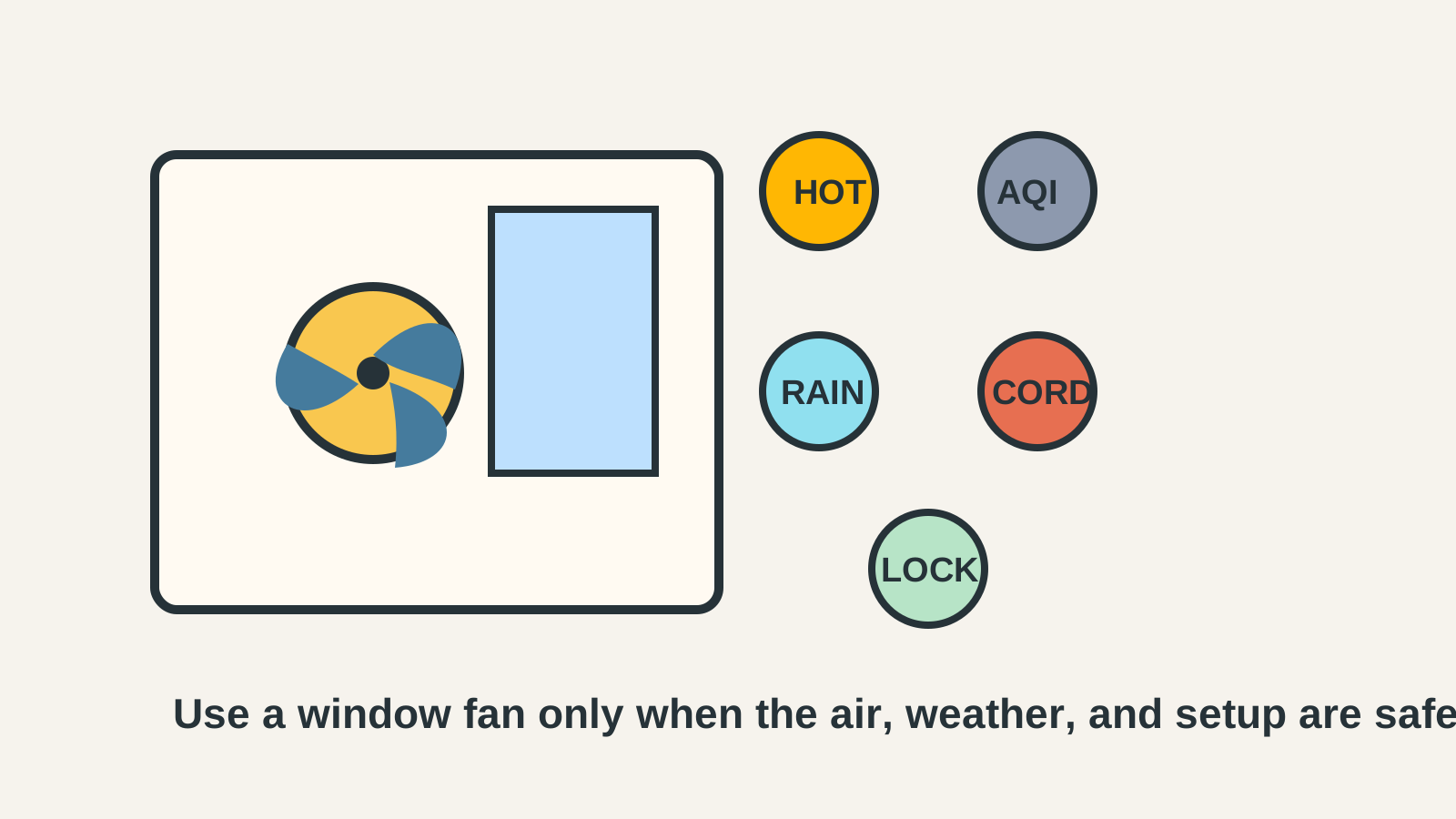
- When Not to Use a Window Fan: Heat, Smoke, and Safety
What to buy and where it fits
As an Amazon Associate, House of Agile earns from qualifying purchases. Prices and availability change, so check the current listing before buying.
The right fan depends on the job. For pushing air through a window or across a whole room, raw airflow wins. For cooling one person at a desk, a small quiet fan is plenty. Here is how the main types compare for the airflow goals in this article.
- 20-inch box fan (Box fan). Best for: Moving the most air through an open window or across a whole room on a budget. In short: airflow high; noise moderate to high at top speed; large, sits in or just back from the window. Watch out: Pull it about 0.5 m back from the screen so it does not short-circuit its own airflow. Compare options on Amazon
- High-velocity floor fan (Floor fan). Best for: Maximum throw across a large or long room when you need to push air a long way. In short: airflow very high; noise high; compact metal cage, tilts to aim. Watch out: Loud; better for daytime or garages than a quiet bedroom. Compare options on Amazon
- Air circulator (Air circulator). Best for: Mixing and circulating air in a room that has no usable window airflow. In short: airflow medium, focused stream; noise low to moderate; small, sits on the floor or a shelf. Watch out: Circulates room air rather than exhausting it; pair with an open window for fresh air. Compare options on Amazon
- Desk or personal fan (Desk fan). Best for: Targeted personal cooling at a desk or bedside, where you do not need whole-room flow. In short: airflow low to medium, but effective up close; noise low; very small. Watch out: Will not cool a room; it cools the person in front of it. Compare options on Amazon
- Tower fan (Tower fan). Best for: Oscillating coverage in a tight space when floor footprint and quiet matter. In short: airflow medium; noise low; tall and narrow. Watch out: Lower raw airflow than a box or floor fan; favor it for comfort, not for window exhaust. Compare options on Amazon
This article is independent practical analysis by House of Agile. It reflects a supplied experiment transcript, public sources, and general airflow reasoning, not professional HVAC, electrical, or heat-safety advice.
Sources
Primary source
- Matthias Wandel, fan placement experiment video, accessed 2026-06-26. https://www.youtube.com/watch?v=1L2ef1CP-yw
Supporting sources
- Box fan and DIY air-cleaner study, used for box-fan flow and shroud discussion, accessed 2026-06-26. https://pmc.ncbi.nlm.nih.gov/articles/PMC9107182/
- Box fan shroud and DIY air-cleaner study, accessed 2026-06-26. https://pmc.ncbi.nlm.nih.gov/articles/PMC9828579/
- SAE fan and shroud CFD paper, used for general shroud principles, accessed 2026-06-26. https://doi.org/10.4271/2015-01-1336
- EnergyCodeAce screen pressure-drop appendix, accessed 2026-06-26. https://www.energycodeace.com/site/custom/public/reference-ace-2019/Documents/appendixbscreenpressuredrop.htm
- Building America Solution Center, whole-house fan guidance, accessed 2026-06-26. https://basc.pnnl.gov/resource-guides/whole-house-fans
Method note
The article distinguishes between a poorly placed box fan and an optimized box fan. The transcript supports the claim that a smaller fan can match a box fan only when the box fan is placed poorly against the screen.