When Not to Use a Window Fan: Heat, Smoke, and Safety
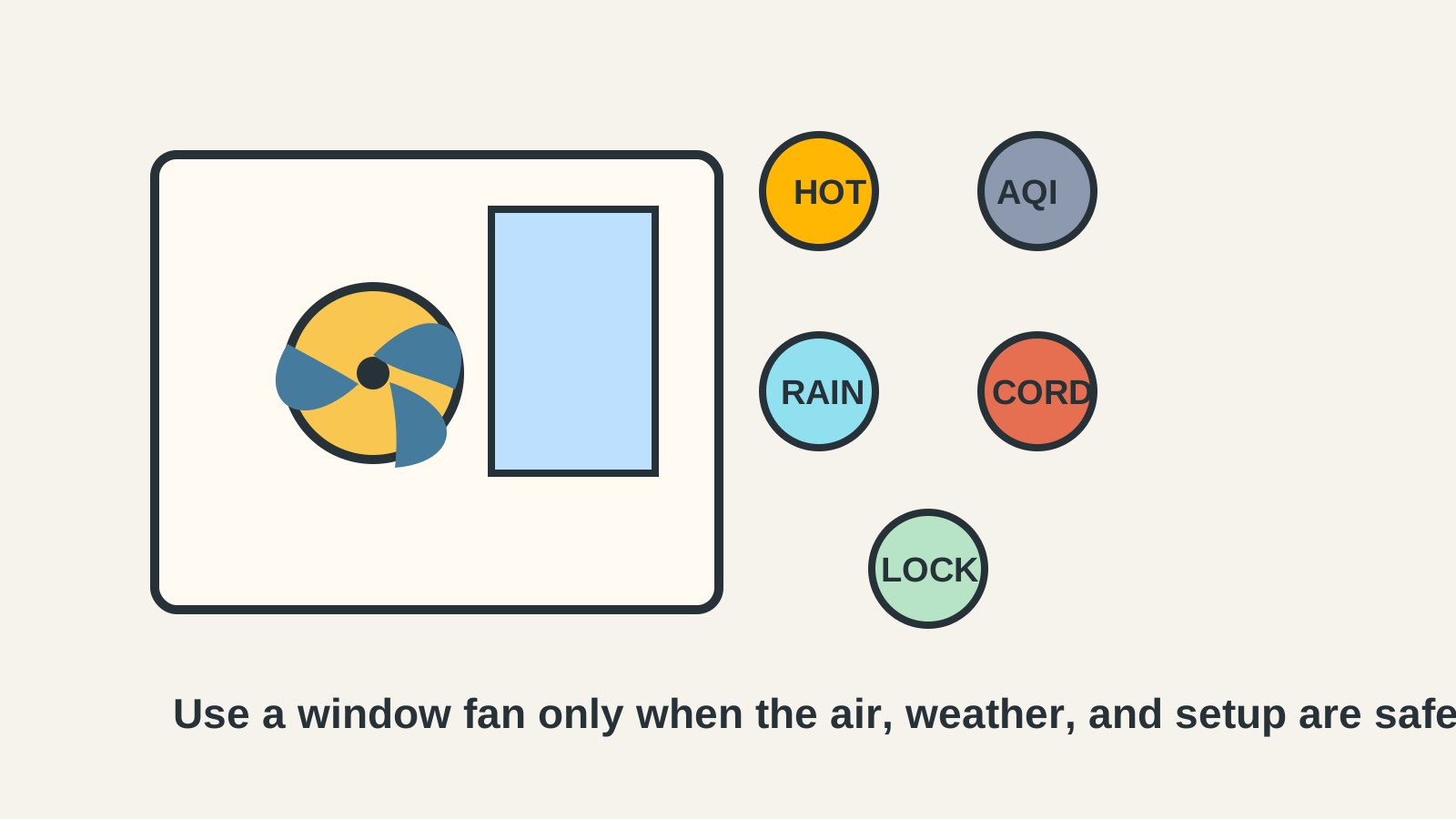
Do not treat a window fan as harmless in every condition. Check temperature, smoke, humidity, rain, cords, and window security first.
A window fan is simple, cheap, and useful. It is not automatically safe or helpful in every condition.
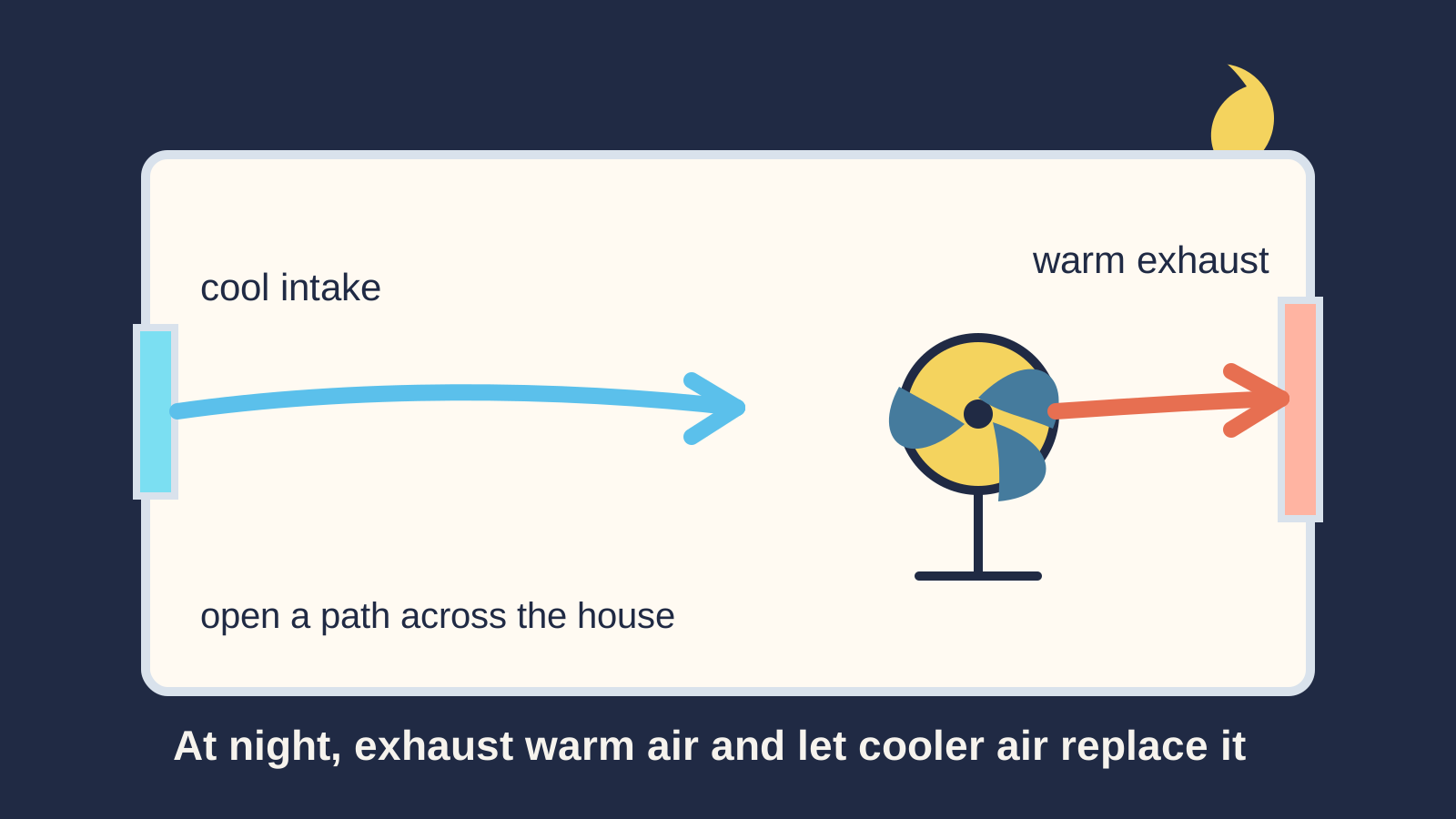
The basic night-cooling idea is sound: when outside air is cooler and clean, use a fan to exhaust warm indoor air and pull cooler air in through another window. The trouble starts when outside air is hotter, smoky, humid, rainy, or unsafe to bring indoors.
Before running a window fan overnight, check five things:
- Is outside air cooler than inside?
- Is outdoor air quality acceptable?
- Is humidity manageable?
- Is the fan and cord setup dry and stable?
- Is the open window safe for security and fall risk?
Do not use a window fan to bring in hotter air
A fan does not cool air. It moves air.
If the air outside is hotter than the air inside, an intake fan will bring heat in. Even an exhaust fan can perform poorly if the replacement air coming through other windows is hotter than the indoor air you are trying to remove.
The practical rule is: start open-window fan cooling only when outside temperature has fallen below indoor temperature. Stop in the morning when outside catches up.
Be careful during dangerous heat
Fans help many people feel cooler because moving air improves sweat evaporation. But public health guidance warns against relying on fans alone during dangerous heat, especially for vulnerable people and very hot indoor conditions.
Use fan placement as a comfort and ventilation tool, not as an emergency heat plan. If indoor air is dangerously hot, if someone feels dizzy, confused, weak, nauseated, or stops sweating normally, seek cooler conditions and follow local heat-health guidance.
A fan is not a substitute for air conditioning, cooling centers, hydration, medical care, or checking on vulnerable people during heat waves.
Do not pull in wildfire smoke or bad outdoor air
Open-window cooling is a bad trade when outdoor air is smoky or severely polluted.
Wildfire smoke particles can enter through open windows and make indoor air unhealthy. During smoke events, health agencies generally recommend keeping windows and doors closed, using filtration, and avoiding outdoor air intake.
If you need cooling during smoke:
- Keep windows closed when possible.
- Use HVAC recirculation if available.
- Use a HEPA purifier or a safe DIY fan-filter setup.
- Follow local AQI and smoke guidance.
- Do not use a window fan to pull smoky air inside.
The same caution can apply during severe smog or pollen episodes for sensitive people.
Humidity can make night cooling worse
Natural ventilation works best when nights are cooler and reasonably dry. In hot, humid weather, open-window cooling can bring moisture into the home. That can make rooms feel clammy and may worsen indoor air quality if repeated over time.
If the night air is humid and the house already feels damp, a window fan may not be the right tool. Mechanical cooling or dehumidification may be more effective.
Electrical and window safety matter
Window fans often end up in improvised setups. That is where avoidable risk appears.
Keep the basics boring:
- Keep fans and cords away from rain and standing water.
- Do not pinch cords in window frames.
- Avoid overloaded extension cords.
- Use a stable fan position so it cannot fall.
- Do not leave a questionable DIY setup unattended.
- Keep loose curtains away from blades and hot motors.
- Use newer box fans with safety features for DIY filter setups.
Also think about the window itself. A wide-open ground-floor window can be a security risk. A wide-open upper-floor window can be a fall risk, especially in rooms used by children. Use stops, partial openings, or a different window when needed.
A safer window-fan checklist
Use this before running the fan for hours:
- Outside air is cooler than inside.
- Outdoor AQI and smoke conditions are acceptable.
- Rain will not reach the fan or cords.
- The fan is stable and not pinching a cord.
- Curtains and blinds are clear of the fan.
- The window opening is secure for the household.
- Another window provides a controlled intake path.
- You have a plan to close windows in the morning.
If any of those fail, change the setup or skip window-fan cooling for the night.
Quick answers
Can a fan make heat illness worse? In some dangerous heat conditions, relying on a fan alone can be unsafe. Follow public health guidance and seek cooler conditions when indoor heat is extreme or symptoms appear.
Can I use a window fan during wildfire smoke? Usually no. Keep windows closed and use filtration unless local guidance and your filtration setup clearly support another approach.
Is it safe to run a fan in a window during rain? Avoid it if rain can reach the fan, plug, or extension cord.
What if I need airflow but the outside air is bad? Use indoor air movement and filtration instead of open-window intake. A fan can circulate indoor air without bringing outdoor air in.
Related reading:
- How to Cool a House at Night With One Fan and Two Windows
- Where to Put a Window Fan So It Actually Moves Air
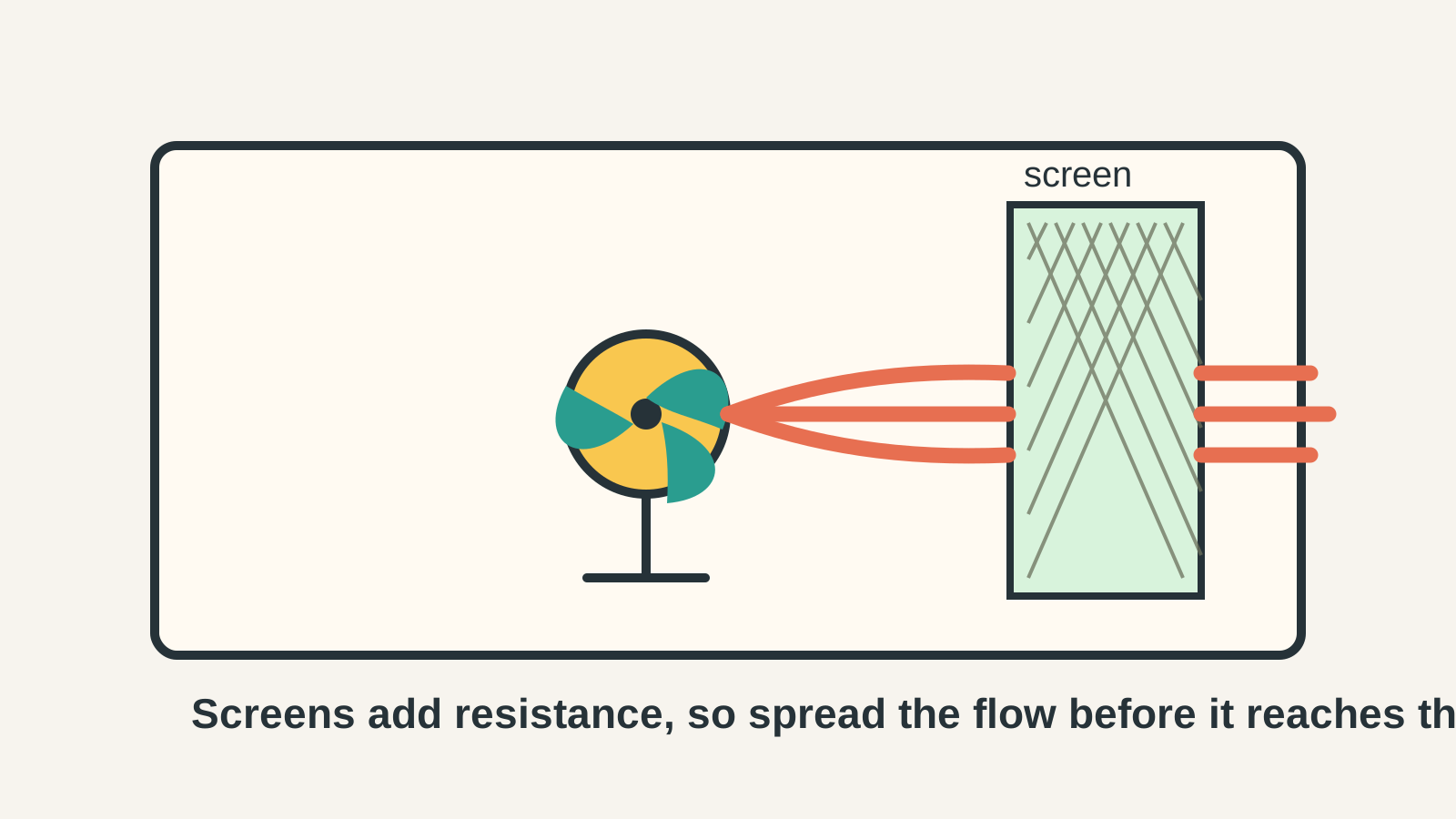
- How Much Do Window Screens Reduce Fan Airflow?
What to buy and where it fits
As an Amazon Associate, House of Agile earns from qualifying purchases. Prices and availability change, so check the current listing before buying.
The checklist above is mostly about judgement, but a few inexpensive tools make each check easier to answer honestly.
- Indoor and outdoor thermometer (Check 1). Best for: Knowing whether outside is actually cooler than inside before you open up, and when to close in the morning. In short: two readings on one display. Watch out: Keep the outdoor sensor out of direct sun. Compare options on Amazon
- HEPA air purifier (Smoke nights). Best for: Cleaning indoor air with the windows closed during wildfire smoke or bad AQI. In short: size by smoke CADR, as covered in how to size an air purifier. Watch out: It cleans the air you have; it does not bring in fresh air. Compare options on Amazon
- MERV 13 filters for a box fan filter setup (DIY filtration). Best for: A low-cost smoke filter built from a newer box fan and furnace filters. In short: use filters that match the fan's face size. Watch out: Use a newer box fan with safety features, and do not leave a questionable DIY setup unattended. Compare options on Amazon
- Window restrictor locks (Security and falls). Best for: Upper-floor windows in rooms used by children, and ground-floor windows left open overnight. In short: limits how far the window opens while still letting air through. Watch out: Check the lock type fits your window, and keep a way to open fully in an emergency. Compare options on Amazon
This article is independent practical analysis by House of Agile. It reflects public health and air-quality sources, but it is not medical, electrical, or emergency advice. Follow local heat, smoke, and safety guidance.
Sources
Sources
- CDC heat and health guidance, accessed 2026-06-26. https://www.cdc.gov/heat-health/about/index.html
- CDC heat safety PDF, accessed 2026-06-26. https://stacks.cdc.gov/view/cdc/32734/cdc_32734_DS1.pdf
- Cochrane review on electric fans during heatwaves, accessed 2026-06-26. https://www.cochrane.org/about-us/news/featured-review-electric-fans-during-heatwaves
- Center for the Built Environment, fans and heatwaves research summary PDF, accessed 2026-06-26. https://cbe.berkeley.edu/wp-content/uploads/2022/04/01-Fans-and-heatwaves-04-22.pdf
- U.S. EPA, wildfires and indoor air quality guidance, accessed 2026-06-26. https://www.epa.gov/emergencies-iaq/wildfires-and-indoor-air-quality-iaq
- Government of Canada, wildfire smoke and indoor air guidance, accessed 2026-06-26. https://www.canada.ca/en/services/health/healthy-living/environment/air-quality/wildfire-smoke/protecting-your-physical-mental-health.html
- Oregon State University Extension, protecting indoor air from wildfire smoke, accessed 2026-06-26. https://extension.oregonstate.edu/catalog/em-9379-protecting-indoor-air-wildfire-smoke
- U.S. Department of Energy, natural ventilation guidance, accessed 2026-06-26. https://www.energy.gov/energysaver/natural-ventilation
Method note
This article is a safety boundary around open-window fan use. It is not medical, electrical, or emergency advice and should defer to local heat, smoke, and electrical safety guidance.