How to Cool a House at Night With One Fan and Two Windows
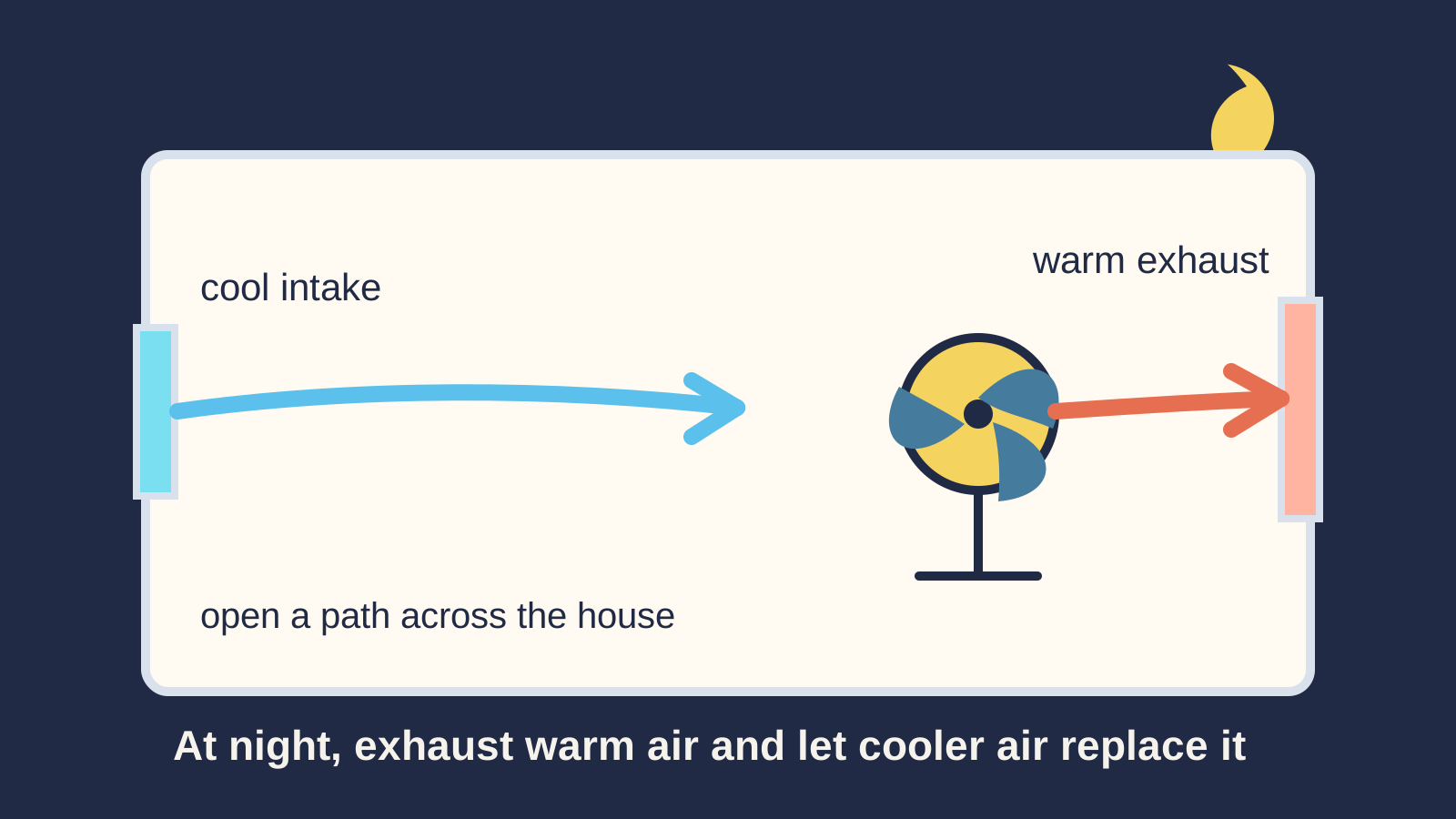
To cool a house at night, open a cool intake window, place one fan 0.5 to 1.5 m inside another window, and blow warm indoor air outward.
Cooling a house at night is mostly about timing and airflow. If the air outside is cooler than the air inside, your job is to replace warm indoor air with cooler outdoor air.
One fan can help, but only if it is part of a path:
- Open one window as the intake.
- Put the fan near another window as the exhaust.
- Point the fan outward.
- Pull the fan back from the exhaust window, ideally 0.5 to 1.5 m inside the room.
- Close the system in the morning before outdoor air warms back up.
The fan does not create cold air. It moves air that is already available.
Step 1: Wait until outside is cooler
Do not start night cooling just because the sun is down. Start when outdoor air is cooler than indoor air.
If outside is still hotter, opening windows and running a fan can bring heat in. If outside is cooler, ventilation can flush heat from the building.
This is also why morning matters. Once outdoor air warms back up, close windows and blinds, especially on sunny sides of the home, to keep the overnight cooling inside.
Step 2: Pick intake and exhaust windows
You need at least two openings:
- Intake: where cooler outdoor air enters.
- Exhaust: where warm indoor air leaves.
Pick openings that are separated. Opposite sides of a room are better than two windows beside each other. In a multi-story home, a cool lower-level intake and an upstairs exhaust can work well because warm air naturally collects high in the building.
The fan goes on the exhaust side for whole-house flushing. Its job is to pull air through the home and push warm indoor air outside.
Step 3: Pull the fan back from the exhaust window
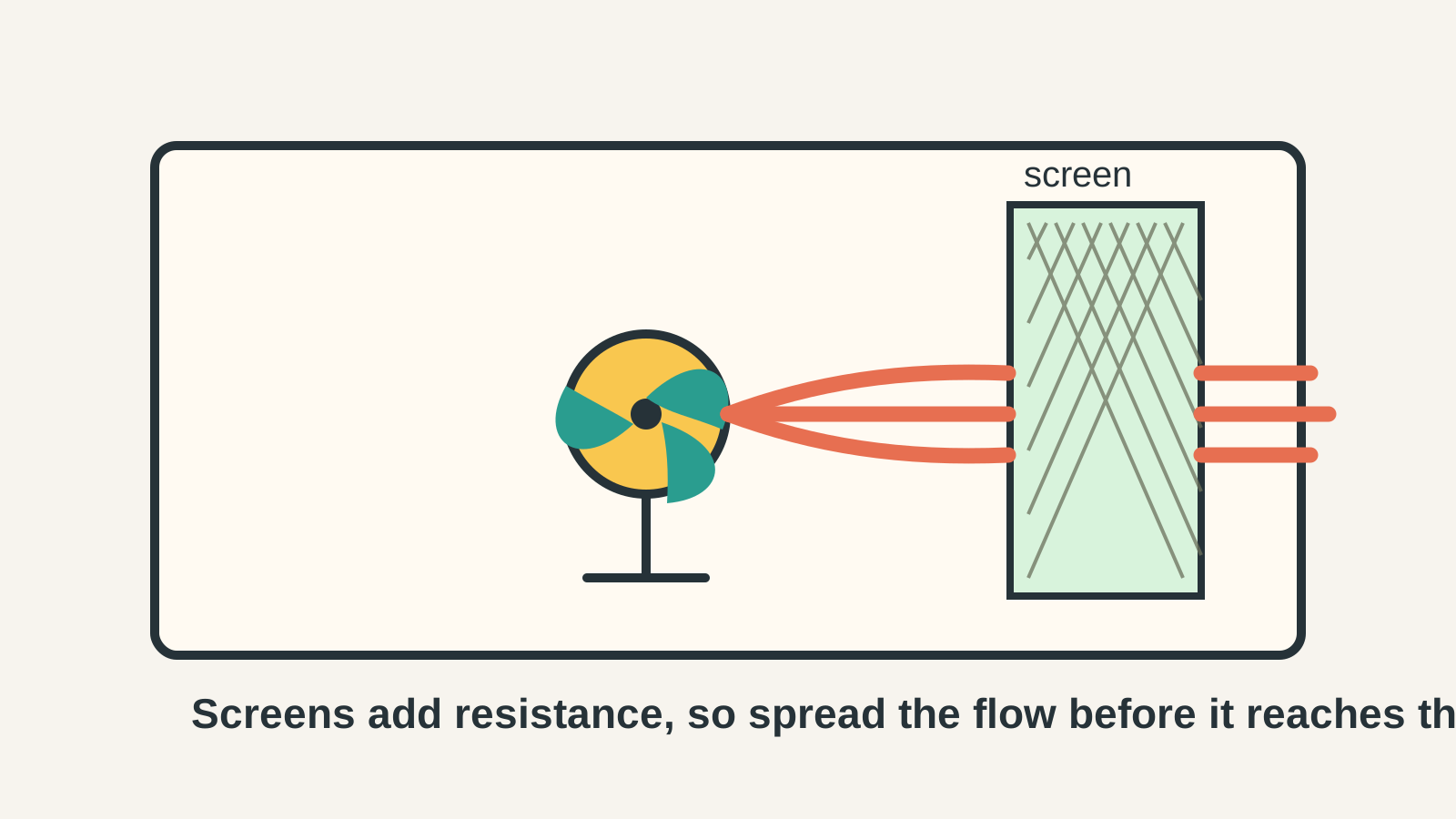
The measured fan-placement experiment found that a fan worked better when it was pulled back from the screen rather than pressed against it. The clearest improvement appeared once the fan was about 0.5 m from the window, and performance stayed broadly similar farther back in that room.
For a simple night setup:
- Put the fan at least 0.5 m / 2 ft inside.
- Try 1.0 to 1.5 m / 3 to 5 ft if the room allows it.
- Aim the fan so the center of the air stream exits through the window.
- Keep curtains and blinds out of the jet.
- Leave the path between intake and exhaust as open as practical.
Distance only helps if the fan is still aimed well.
Step 4: Close the wrong openings
More open windows are not always better when using one fan. If a window beside the exhaust fan is open, the fan may pull air from that nearby opening and push it straight back out. That cools the window area but not the house.
Start with one intake and one exhaust. Then tune the path.
If one bedroom is not getting airflow, use that bedroom as the intake and close another window. If the hallway is the bottleneck, open doors. If air loops around the fan room, close nearby openings.
Think in paths, not window count.
Step 5: Let natural wind do the work when it can
If outdoor wind is already flushing the home, a fan may add little. It can even disturb a good natural cross-breeze if placed badly.
On breezy nights, open windows that create a clean cross-draft. Use the fan only for still rooms, warm upstairs zones, or corners that natural wind does not reach.
On still nights, the fan matters more.
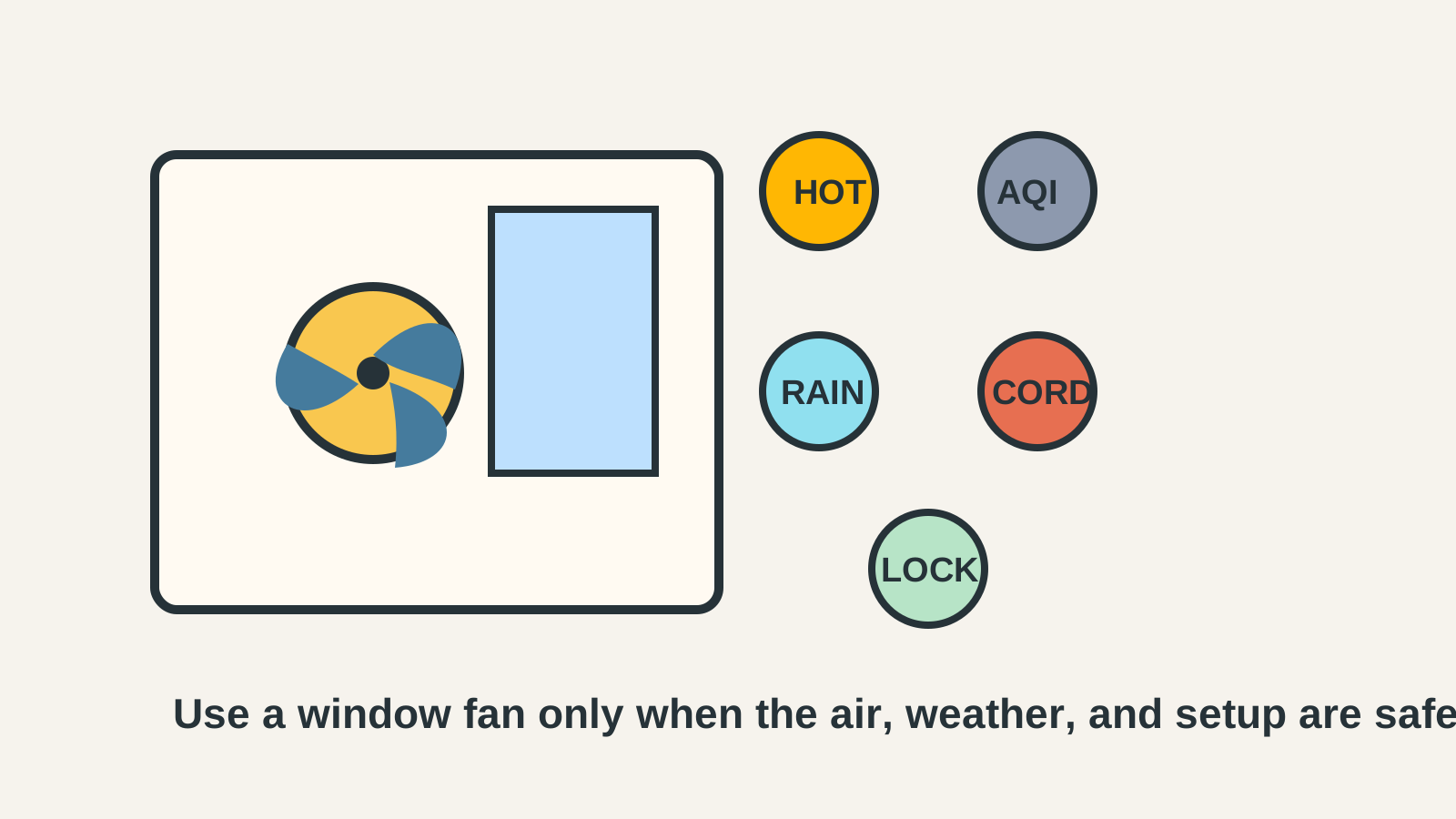
Step 6: Do not ignore air quality and humidity
Window-based night cooling is not always the right move.
Pause it when outdoor air is smoky, polluted, or full of heavy pollen that bothers the household. During wildfire smoke events, public health guidance generally favors keeping windows and doors closed and using filtration instead of bringing outdoor air in.
Humidity also matters. In hot, humid weather, night ventilation may bring in moisture that makes the home feel worse and can contribute to indoor air quality problems. In that case, mechanical cooling and dehumidification may be more useful than open-window flushing.
A quick nightly routine
Use this sequence:
- Check that outside air is cooler than inside.
- Check outdoor air quality.
- Open the intake window first.
- Open the exhaust window.
- Place the fan 0.5 to 1.5 m inside the exhaust window.
- Point it outward and turn it on.
- Feel for air entering at the intake window.
- Adjust doors and nearby windows until the airflow path makes sense.
- In the morning, shut windows and blinds before outdoor air warms up.
Quick answers
Is it better to blow hot air out or cool air in? For whole-house night flushing, start by blowing warm indoor air out and letting cooler outdoor air enter elsewhere.
How many windows do I need? At least two: one intake and one exhaust. More can help if they support the airflow path.
Is upstairs exhaust and downstairs intake always better? It is a strong default in multi-story homes with an open vertical path, but single-story homes usually rely on lateral cross-ventilation between two exterior walls.
What if there is wildfire smoke outside? Do not use open-window night cooling during smoke events unless you have a safe filtered setup. Keep windows closed and use filtration.
Related reading:
- Where to Put a Window Fan So It Actually Moves Air
- How Much Do Window Screens Reduce Fan Airflow?
- When Not to Use a Window Fan: Heat, Smoke, and Safety
What to buy and where it fits
As an Amazon Associate, House of Agile earns from qualifying purchases. Prices and availability change, so check the current listing before buying.
The right fan depends on the job. For pushing air through a window or across a whole room, raw airflow wins. For cooling one person at a desk, a small quiet fan is plenty. Here is how the main types compare for the airflow goals in this article.
- 20-inch box fan (Box fan). Best for: Moving the most air through an open window or across a whole room on a budget. In short: airflow high; noise moderate to high at top speed; large, sits in or just back from the window. Watch out: Pull it about 0.5 m back from the screen so it does not short-circuit its own airflow. Compare options on Amazon
- High-velocity floor fan (Floor fan). Best for: Maximum throw across a large or long room when you need to push air a long way. In short: airflow very high; noise high; compact metal cage, tilts to aim. Watch out: Loud; better for daytime or garages than a quiet bedroom. Compare options on Amazon
- Air circulator (Air circulator). Best for: Mixing and circulating air in a room that has no usable window airflow. In short: airflow medium, focused stream; noise low to moderate; small, sits on the floor or a shelf. Watch out: Circulates room air rather than exhausting it; pair with an open window for fresh air. Compare options on Amazon
- Desk or personal fan (Desk fan). Best for: Targeted personal cooling at a desk or bedside, where you do not need whole-room flow. In short: airflow low to medium, but effective up close; noise low; very small. Watch out: Will not cool a room; it cools the person in front of it. Compare options on Amazon
- Tower fan (Tower fan). Best for: Oscillating coverage in a tight space when floor footprint and quiet matter. In short: airflow medium; noise low; tall and narrow. Watch out: Lower raw airflow than a box or floor fan; favor it for comfort, not for window exhaust. Compare options on Amazon
This article is independent practical analysis by House of Agile. It reflects a supplied experiment transcript, public sources, and general airflow reasoning, not professional HVAC, electrical, or heat-safety advice. During extreme heat, follow local heat guidance and do not rely on fan placement alone.
Sources
Primary source
- Matthias Wandel, fan placement experiment video, accessed 2026-06-26. https://www.youtube.com/watch?v=1L2ef1CP-yw
Supporting sources
- U.S. Department of Energy, natural ventilation guidance, accessed 2026-06-26. https://www.energy.gov/energysaver/natural-ventilation
- Building America Solution Center, whole-house fan guidance, accessed 2026-06-26. https://basc.pnnl.gov/resource-guides/whole-house-fans
- Colorado Home Cooling, whole-house fan operating guidance, accessed 2026-06-26. https://www.cohomecooling.com/post/how-to-use-your-whole-house-fan
- Habitat for Humanity, whole-house fan guide PDF, accessed 2026-06-26. https://www.habitat.org/lc/env/pdf/whole_house_fan.pdf
- Homes and Gardens, cross-draft guidance quoting an HVAC technician, accessed 2026-06-26. https://www.homesandgardens.com/solved/cross-draft
- U.S. EPA, wildfires and indoor air quality guidance, accessed 2026-06-26. https://www.epa.gov/emergencies-iaq/wildfires-and-indoor-air-quality-iaq
Method note
This article applies whole-house fan and natural ventilation principles to a portable fan setup. It is most applicable when outdoor air is cooler and cleaner than indoor air.