How Much Do Window Screens Reduce Fan Airflow?
Window screens can materially reduce airflow. Clean the screen, clear the curtain path, and avoid pushing a fan hard against a restrictive mesh.
If a fan seems weak at a window, the fan may not be the whole problem. The screen may be doing more than you think.
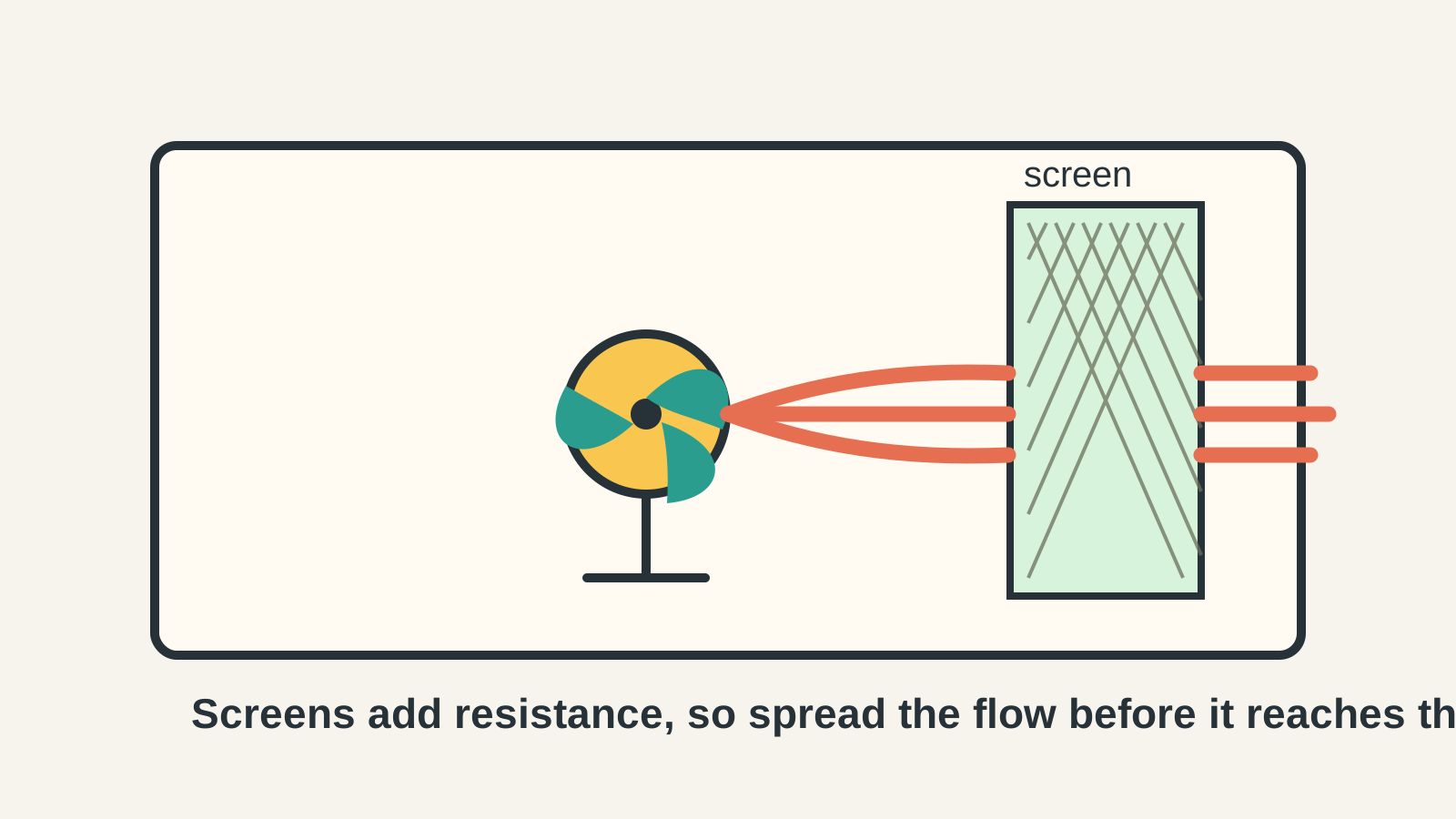
A window screen is a porous obstruction. It lets air through, but it also adds resistance. The finer and dirtier the mesh, the more resistance it adds. Technical studies on screens show that pressure drop rises with air speed, which means the screen becomes more of a bottleneck when a fan tries to push a concentrated jet through it.
That matters for fan placement.
Why screens change fan performance
Airflow through a window is not just about the size of the opening. It is about the effective open area and the resistance in that opening.
A screen reduces the clear open area. It also breaks the airflow into many tiny paths around the mesh. When a fan is pressed directly against the screen, it can push a fast, uneven patch of air into one part of the mesh. That can create more local loss than a smoother flow across more of the opening.
Pulling the fan back can help because the jet has room to spread before it reaches the screen. The window sees a broader, more usable stream instead of one tight blast.
The screen can hide a good fan
If your window has a tight insect screen, a small opening, and a curtain hanging behind it, even a strong fan can look unimpressive.
Common restrictions include:
- Fine insect mesh.
- Dirty or dusty screens.
- Half-open windows.
- Heavy curtains near the opening.
- Blinds crossing the fan jet.
- A fan pressed directly into the screen.
- Side gaps that let air loop around the fan.
Before buying a bigger fan, fix the opening.
What to try first
Start with the low-risk improvements:
- Clean the screen.
- Open the window as wide as safely practical.
- Move curtains and blinds out of the airflow path.
- Pull the fan at least 0.5 m / 2 ft back from the screen.
- Aim the fan so the jet exits cleanly through the opening.
- Open another window elsewhere as intake.
Then test airflow at the intake window with a strip of tissue or your hand. If the intake pull improves, the screen and placement were limiting the system.
Should you remove the screen?
Sometimes removing a screen increases airflow, but it is not always the right advice.
Screens keep insects out. They add a layer of safety in some windows. They may also be part of a rental or building setup you should not alter. If removing the screen creates a fall, pest, security, or lease problem, leave it in place.
Instead, improve the setup around it: clean it, pull the fan back, clear obstructions, and use a larger intake opening elsewhere.
Where shrouds fit in
A shroud is a panel or guide that helps the fan push or pull air through the intended opening instead of around the edges.
For a box fan, a shroud can reduce leakage and recirculation. That is why box-fan filter designs often improve when the fan has a simple circular shroud. The same principle can help at a window if the fan must sit in the opening.
There are two different strategies:
- Set-back strategy: pull a bare fan back from the window so it entrains room air and sends a clean jet through the opening.
- Shroud strategy: mount the fan close to the opening but use a panel or seal so air cannot easily loop around the edges.
Both can work. A loose bare fan pressed against a screen is the weak version of both.
Quick answers
Do window screens reduce fan airflow? Yes. Screens add resistance, and the effect grows as air speed through the mesh rises.
Is a dirty screen worse? Yes. Dust and debris reduce open area and can make a fan setup feel weaker.
Should the fan touch the screen? Usually not for a bare portable fan. Start with the fan at least 0.5 m / 2 ft inside and aim it outward.
Can a shroud make an in-window fan better? Yes. A good shroud or panel can reduce edge leakage and recirculation, especially for box fans.
Related reading:
- Where to Put a Window Fan So It Actually Moves Air
- Box Fan vs Desk Fan: When Smart Placement Beats Size
- When Not to Use a Window Fan: Heat, Smoke, and Safety
What to buy and where it fits
As an Amazon Associate, House of Agile earns from qualifying purchases. Prices and availability change, so check the current listing before buying.
The right fan depends on the job. For pushing air through a window or across a whole room, raw airflow wins. For cooling one person at a desk, a small quiet fan is plenty. Here is how the main types compare for the airflow goals in this article.
- 20-inch box fan (Box fan). Best for: Moving the most air through an open window or across a whole room on a budget. In short: airflow high; noise moderate to high at top speed; large, sits in or just back from the window. Watch out: Pull it about 0.5 m back from the screen so it does not short-circuit its own airflow. Compare options on Amazon
- High-velocity floor fan (Floor fan). Best for: Maximum throw across a large or long room when you need to push air a long way. In short: airflow very high; noise high; compact metal cage, tilts to aim. Watch out: Loud; better for daytime or garages than a quiet bedroom. Compare options on Amazon
- Air circulator (Air circulator). Best for: Mixing and circulating air in a room that has no usable window airflow. In short: airflow medium, focused stream; noise low to moderate; small, sits on the floor or a shelf. Watch out: Circulates room air rather than exhausting it; pair with an open window for fresh air. Compare options on Amazon
- Desk or personal fan (Desk fan). Best for: Targeted personal cooling at a desk or bedside, where you do not need whole-room flow. In short: airflow low to medium, but effective up close; noise low; very small. Watch out: Will not cool a room; it cools the person in front of it. Compare options on Amazon
- Tower fan (Tower fan). Best for: Oscillating coverage in a tight space when floor footprint and quiet matter. In short: airflow medium; noise low; tall and narrow. Watch out: Lower raw airflow than a box or floor fan; favor it for comfort, not for window exhaust. Compare options on Amazon
This article is independent practical analysis by House of Agile. It reflects public sources and general airflow reasoning, not professional HVAC, building-code, or safety advice.
Sources
Sources
- Window screen CFD study, accessed 2026-06-26. https://pmc.ncbi.nlm.nih.gov/articles/PMC11168052/
- EnergyCodeAce screen pressure-drop appendix, accessed 2026-06-26. https://www.energycodeace.com/site/custom/public/reference-ace-2019/Documents/appendixbscreenpressuredrop.htm
- Agricultural screen pressure-drop research, accessed 2026-06-26. <https://elibrary.asabe.org/azdez.asp?JID=3&AID=17336&v=41&i=6&T=2&redirType=>
- Matthias Wandel, fan placement experiment video, accessed 2026-06-26. https://www.youtube.com/watch?v=1L2ef1CP-yw
- Box fan and DIY air-cleaner study, used for shroud discussion, accessed 2026-06-26. https://pmc.ncbi.nlm.nih.gov/articles/PMC9107182/
- SAE fan and shroud CFD paper, used for general shroud principles, accessed 2026-06-26. https://doi.org/10.4271/2015-01-1336
Method note
The screen figures depend on mesh type, velocity, dust, and window geometry. The article therefore avoids giving one universal percentage loss and focuses on practical diagnosis.