Portable AC vs Mini-Split Heat Pump: The EU Apartment Math
A portable AC plugs in but must vent a hose outside; a mini-split heat pump is far more efficient and quieter but needs a permanent install and your landlord's permission. A decision guide for European flats.
When a flat gets dangerously hot, two machines end up on the shortlist: a portable air conditioner you wheel in and plug into a socket, and a mini-split heat pump that gets mounted on the wall by an installer. They are often pitched as the same purchase at two price points. They are not. They cool by the same physics but they impose very different conditions on the room, the building, and the lease, and the European context sharpens the choice. Europe is the fastest-warming continent, heating at roughly twice the global average, and the summer of 2024 was its warmest on record, so the question of how to cool a flat is no longer a luxury one for many households.
This is a decision guide, not a product list. The right answer changes between a south-facing rented studio and an owner-occupied bedroom, and it turns on three things most buyers underweight: how each device gets its heat out of the room, what you are legally and physically allowed to install, and what each one costs you in running cost and noise over a long hot week. If you are still deciding between a portable AC and the cheaper non-refrigerant options, start with fan vs air cooler vs portable AC, then come back here for the step up to a fixed system.
What each machine actually is
Both a portable air conditioner and a mini-split are refrigeration machines. Both use a compressor and refrigerant to pull heat out of indoor air and dump it outdoors. The difference is how that split between inside and outside is arranged.
A portable air conditioner keeps the whole refrigeration cycle inside one box on the floor and reaches the outdoors through a flexible exhaust hose. The US Department of Energy classes this family of room units as machines that "cool individual rooms rather than the entire home," with capacities generally running from about 5,500 to 14,000 BTU per hour. The portable version trades installation for self-containment: nothing is fixed to the building, but the heat still has to leave through that hose.
A mini-split, called a ductless minisplit heat pump in its full form, separates the machine into two. The Department of Energy describes it plainly: minisplits "have two main components: an outdoor compressor/condenser and an indoor air-handling unit." The hot, noisy half of the refrigeration cycle lives outside on a wall bracket or balcony, and only a quiet indoor head sits in the room. Because it is a heat pump, the same hardware runs in reverse in winter, so it heats as well as cools. That dual job is part of why it is the device a homeowner tends to choose once the decision is permanent.
What genuinely lowers the temperature, and what just moves air
It is worth being precise about what "cooling" means here, because the market sells the word loosely. A fan does not lower room temperature at all; it moves air so your skin feels cooler while you are in front of it. An evaporative cooler lowers air temperature only in dry climates, and it adds humidity doing so, which makes it a poor fit for muggy coastal heat. Both of those are covered in the companion guide above.
A portable air conditioner and a mini-split are different in kind: they are the two devices on this page that actually remove heat from the room rather than rearranging it. Refrigeration extracts heat and moisture from the indoor air and rejects them outside, so the room genuinely gets cooler and drier. That is the capability you are paying for, and it is why these are the tools that matter for a bedroom that will not cool down at night or for protecting someone vulnerable through a heatwave. If the actual problem is sleep, the device is only half the answer; the bedroom routine in how to sleep during a heatwave is the other half.
The catch that unites both machines is thermodynamic and unavoidable: the heat they pull out of the room has to go somewhere outside. There is no refrigeration air conditioner, portable or fixed, that cools a sealed room with no connection to the outdoors. Any unit advertised as needing no exhaust at all is not doing the same job.
Venting and installation: where renting decides it
This is the line that splits the two for most European tenants.
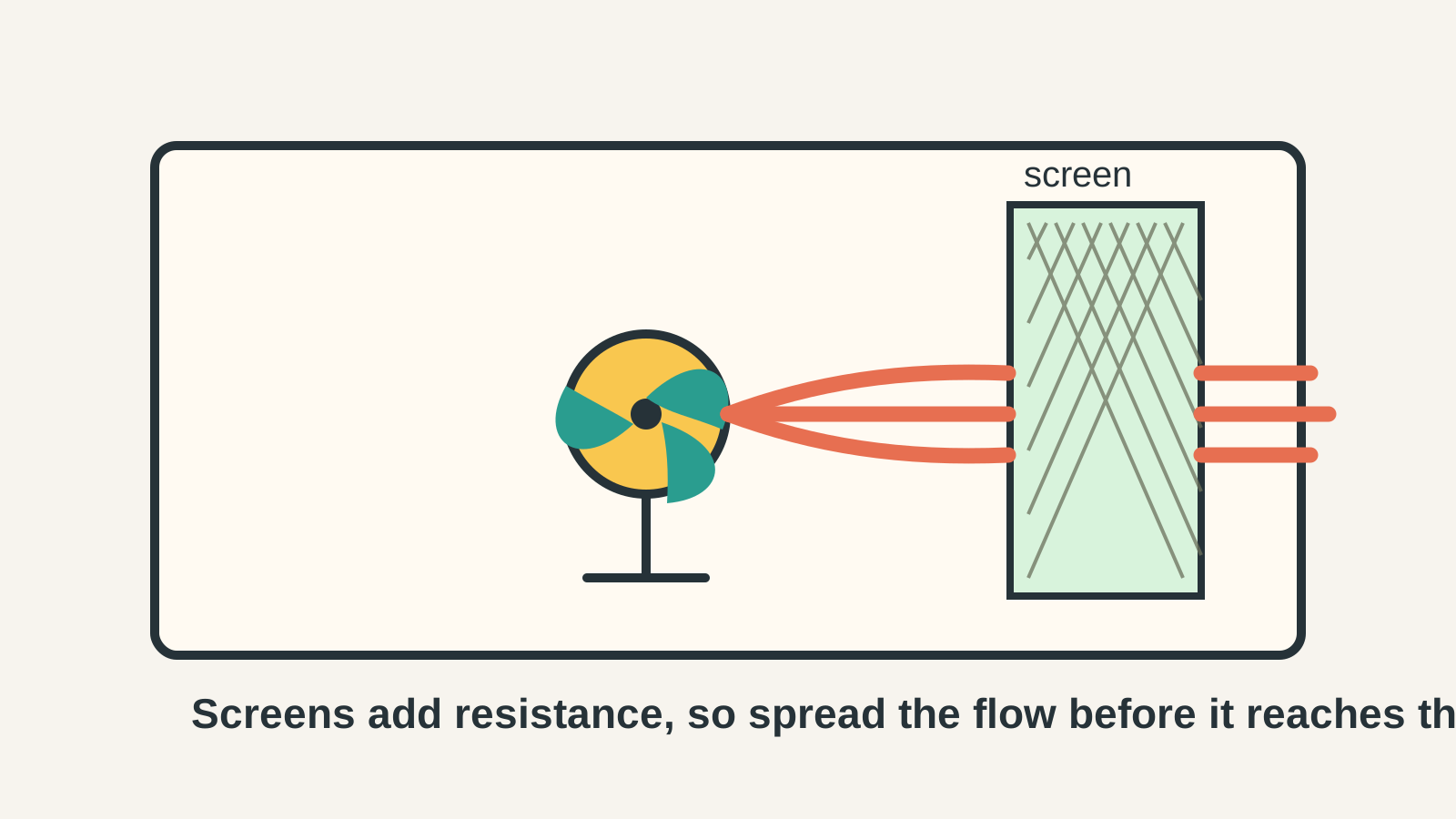
A portable air conditioner needs its exhaust hose vented through an opening to the outside, almost always a window fitted with a panel or kit that seals the gap. The unit itself is not attached to the building, so it leaves no permanent mark, which is exactly why it suits a rental. The friction is the seal. Many European windows are tilt-and-turn or casement designs that do not accept a simple sash kit, and a badly sealed opening lets the hot air you just exhausted leak straight back in, which quietly undoes the unit's work. There is also a hose detail worth understanding. A single-hose unit pushes room air outside to cool its condenser, so it pulls replacement air, some of it warm, in from hallways and gaps elsewhere in the flat, and then has to fight that infiltration. A dual-hose design draws its own outdoor air through a second hose and avoids most of that effect. Both still cool; the single-hose simply works harder. Treat the size of that gap as something to check per model, not a fixed figure.
A mini-split is a permanent installation, and that is the heart of the renter constraint. The Department of Energy notes that the link between the outdoor and indoor units "generally requires only a three-inch hole through a wall for the conduit." A three-inch hole through the outside wall of a building is a structural alteration, not a tenant decision. It needs the owner's permission, an external unit hung where the building and often the neighbours or housing association will tolerate it, and a qualified installer; the DOE advises hiring an experienced installer and consulting a qualified HVAC professional. For an owner-occupier this is a weekend's disruption and a long-term upgrade. For a renter it usually means a conversation with the landlord that ends in no, which is the single most common reason European tenants end up with a portable unit even when a mini-split would be the better machine.
Noise, running cost, and the efficiency logic
The two machines also feel different to live with, and the EU energy label is the honest place to read why.
On noise, geography is destiny. A portable air conditioner keeps its compressor and exhaust fan inside the room with you, so the loudest part of the cycle is in your living space, which is why these units are noticeably present at night. A mini-split puts the compressor outside and leaves only a quiet indoor head in the room, so the disruptive noise is on the far side of the wall. The EU energy label reports sound power in dB(A) for indoor and outdoor units separately, so the figures are there to compare before you buy rather than to guess at.
On running cost, the principle to hold onto is efficiency, expressed qualitatively. Cooling efficiency in the EU is rated by the Seasonal Energy Efficiency Ratio, or SEER, which the label defines as how energy-efficient the unit is across a whole cooling season; for heat-pump heating the equivalent is the SCOP. The label also prints estimated annual energy use in kWh per year and an efficiency class on the familiar A-to-G style scale. The structural reason a fixed mini-split tends to run cheaper for the same cooling is that it is a purpose-matched system with its hot side outdoors and no exhaust hose bleeding conditioned air, whereas a portable unit fights its own infiltration and lives entirely in the room it is cooling. Rather than trust any single advertised number, read the SEER and the kWh-per-year on the label of the specific unit, because that is the figure that translates into your electricity bill over a long hot week. The deeper point is that the gap is about design, not marketing: a two-part fixed system simply has less working against it.
Which makes sense when
There is no universal winner here, only a fit between the machine and your situation.
Choose a portable air conditioner when you rent and cannot alter the building, when you need cooling this week without an installer, when you are cooling one room some of the time rather than a home all summer, or when you may move and want to take the unit with you. Accept in return that it is the louder option in the room, usually the less efficient one on the bill, and that getting the window seal right matters more than people expect; a dual-hose unit is worth seeking out. If a portable unit is your answer, fold it into the wider plan in how to cool an apartment without AC so the device is not doing all the work alone.
Choose a mini-split heat pump when you own the flat or have a landlord's written agreement, when you want to cool a space properly across many summers and heat it in winter from the same hardware, and when quiet operation and lower running cost over years outweigh the upfront install. It is the more capable and more comfortable machine; it is also the one you cannot simply unbox and switch on.
Buy the constraint, not the brochure. The honest first question is not which unit cools better, because both genuinely remove heat. It is whether you are allowed to put a hole in the wall. Answer that, and the European apartment math mostly answers itself.
What to buy and where it fits
As an Amazon Associate, House of Agile earns from qualifying purchases. Prices and availability change, so check the current listing before buying.
A mini-split is an installer's job, so it is not something to order from a listing. If a portable unit is your answer, these searches are a starting point. Check the SEER, the kWh per year, and the noise figures on the energy label of any specific unit.
- Dual-hose portable air conditioner (Renter's pick). Best for: Rented flats where you cannot drill, and cooling one room through a hot week. In short: the second hose draws outdoor air for the condenser, so the unit fights less warm infiltration. Watch out: Louder than a mini-split because the compressor is in the room with you. Compare options on Amazon
- Window seal kit for tilt-and-turn and casement windows (Venting). Best for: Closing the gap around the exhaust hose on European windows that do not take a sash kit. In short: fabric or zip-panel kits that attach without drilling. Watch out: A poor seal lets the exhausted heat leak straight back in and quietly undoes the unit's work. Compare options on Amazon
- Plug-in energy meter (Running cost). Best for: Measuring what a portable unit really draws, so you can compare it to the label and your tariff. In short: sits between the socket and the plug and reads watts and kWh. Watch out: Check its maximum rated load covers the air conditioner's draw. Compare options on Amazon
This article is independent analysis by House of Agile. It reflects public energy guidance and general refrigeration physics, not professional HVAC, electrical, legal, or tenancy advice. Confirm the specifications, noise and efficiency ratings, venting needs, and any landlord or building permissions for a specific unit and flat before buying or installing.
Sources
Energy and appliance guidance
- US Department of Energy, Energy Saver, "Room Air Conditioners." Room units cool individual rooms rather than the entire home, generally range from about 5,500 to 14,000 BTU per hour, and are rated for efficiency by the Energy Efficiency Ratio (EER/EER2). https://www.energy.gov/energysaver/room-air-conditioners
- US Department of Energy, Energy Saver, "Ductless Minisplit Heat Pumps." Minisplits have two main components, an outdoor compressor/condenser and an indoor air-handling unit; the connection generally requires a three-inch hole through a wall for the conduit; for best results hire an experienced installer and consult a qualified HVAC professional. https://www.energy.gov/energysaver/ductless-minisplit-heat-pumps
EU efficiency and noise labelling
- European Commission, Energy-efficient products, "Air Conditioners and Comfort Fans." The EU energy label reports seasonal cooling efficiency (SEER) and seasonal heating efficiency (SCOP), annual energy consumption in kWh/year for cooling and heating, indoor and outdoor sound power levels in dB(A), heating climate zones, and an efficiency class scale. https://energy-efficient-products.ec.europa.eu/product-list/air-conditioners-and-comfort-fans_en
European heat context
- Copernicus Climate Change Service, "Copernicus: Summer 2024 - Hottest on record globally and for Europe." Summer 2024 was Europe's warmest on record. https://climate.copernicus.eu/copernicus-summer-2024-hottest-record-globally-and-europe
- European Environment Agency / WMO, "European State of the Climate." Europe is the fastest-warming continent, heating at roughly twice the global average since the 1980s, with heatwaves becoming more frequent and intense. https://wmo.int/media/news/european-state-of-climate-extreme-events-warmest-year-record