How to Cool an Apartment Without AC: A 24-Hour Heatwave Plan
A time-of-day plan to keep a flat liveable in a heatwave without AC: bank the cool early, block the sun, cool yourself, flush heat at night, and know the warning signs.
A heatwave in an apartment with no air conditioning is not won with one clever trick. It is won with timing. The same open window that rescues you at 5 am will cook the room at 2 pm. So the most useful way to think about a hot day indoors is as a schedule, not a gadget.
This is a plan by the clock. It pulls together what official health and energy guidance actually says, and it points you to the specialist airflow articles where the detail lives, instead of repeating it. One thing to hold onto before we start: there is no single indoor temperature that is safe for everyone. The World Health Organization suggests keeping rooms below 32 C during the day and 24 C at night, but it ties those targets specifically to infants, adults over 60, and people with chronic conditions, not to every household and climate. Treat your own limits, and the limits of anyone vulnerable in your home, as the real threshold.
Before sunrise and early morning: bank the cool
The coolest air of the day is usually around dawn. That is when you let it in.
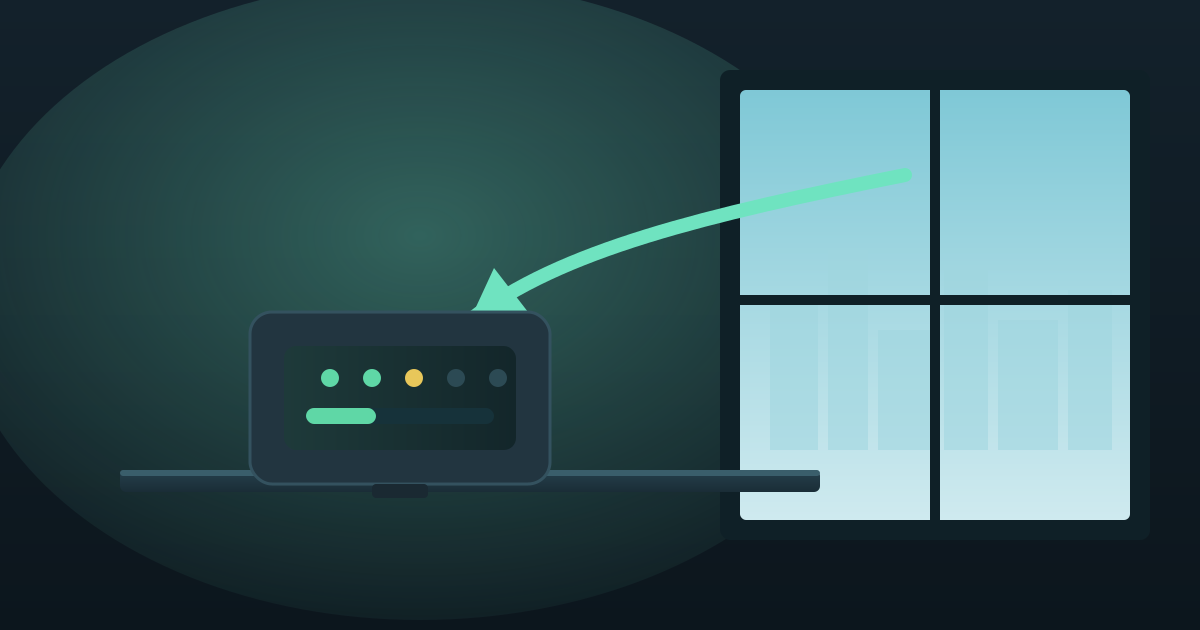
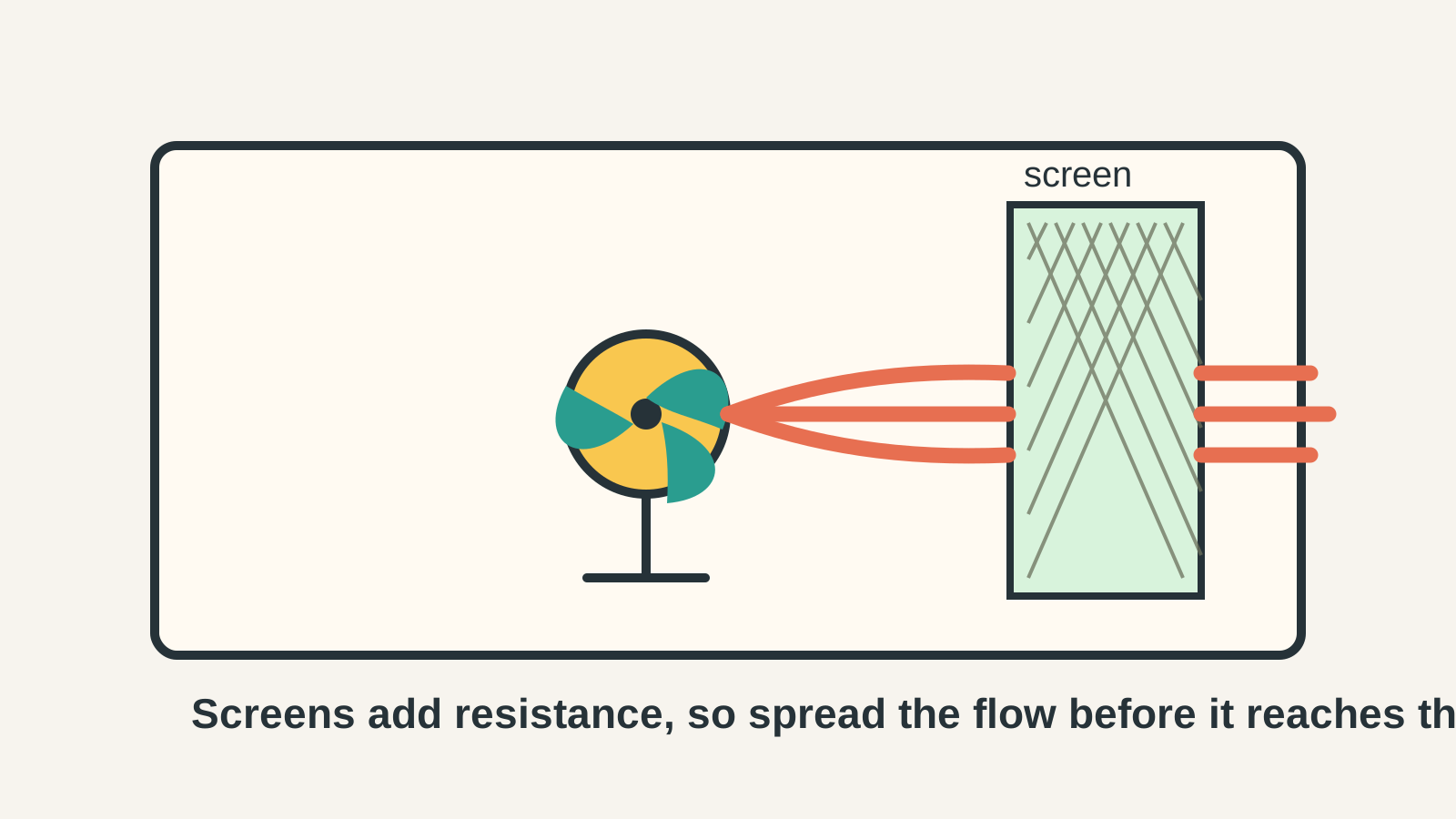
If the air outside is cooler than the air inside, open windows on more than one side and let the flat flush out the heat it stored overnight. A fan can move that exchange along, and the mechanics of doing it well, which window, which direction, how far back to place the fan, are covered in how to cool a house at night with one fan and two windows and where to put a window fan so it actually moves air.
Then watch the temperature turn. The moment outside starts climbing toward inside, usually mid to late morning, reverse everything. Close the windows. This is the single decision most people get wrong: they leave windows open all day because open windows feel like the cooling move. In a heatwave, an open window in full afternoon sun is a heat intake.
Mid-morning to afternoon: seal the heat out
Once it is hotter outside than inside, your apartment becomes a box you are trying to keep sealed and shaded.
Close windows, and close the blinds, shutters, or curtains on any side facing the sun. WHO, the NHS, and the UK government's hot weather guidance all give the same instruction: block direct sunlight during the day and keep the windows shut while the outside air is hotter than the inside. External shutters help most because they stop the sun before it reaches the glass. If you only have internal curtains, light-coloured ones reflect more than dark ones.
Then cut the heat you are making indoors, because every watt of electricity in a sealed flat ends up as heat:
- Turn off devices and lights you are not using. Standby gadgets and chargers add warmth over a long day.
- Avoid the oven and hob at peak heat. Cook at night if you can, or eat cold meals.
- Delay the dishwasher, dryer, and other hot appliances until the cooler hours.
None of this makes a room cold. It slows how fast the sealed flat heats up, which is the whole game during the hottest part of the day.
The hottest hours: cool the person, not just the place
When you cannot make the room much cooler, shift the goal to cooling your body. That distinction matters, because a fan is a good example of a tool that cools people without cooling rooms, which is exactly why device choice deserves its own page: fan vs air cooler vs portable AC.
Practical body cooling that official guidance supports:
- Drink water regularly, before you feel thirsty. WHO suggests about one cup an hour and at least 2 to 3 litres across the day in heat. The NHS adds: have cold drinks and avoid alcohol, caffeine, and very hot drinks.
- Put cool water on your skin. A cool shower, a damp cloth, or cool water on the wrists, neck, and other pulse points all help, and the NHS and UKHSA both recommend them.
- Wear loose, light clothing.
- Use a fan for comfort, with a caveat covered below and in the device guide.
If your flat simply will not stay tolerable, leave it for a while. WHO advises spending 2 to 3 hours of the hottest part of the day somewhere cool, such as an air-conditioned public building. A library, a shopping centre, a museum, or a community cooling centre all count. The EPA and CDC give the same advice for people without air conditioning at home. A few hours in real cool is more protective than any amount of fiddling with curtains.
Evening and overnight: flush the heat back out
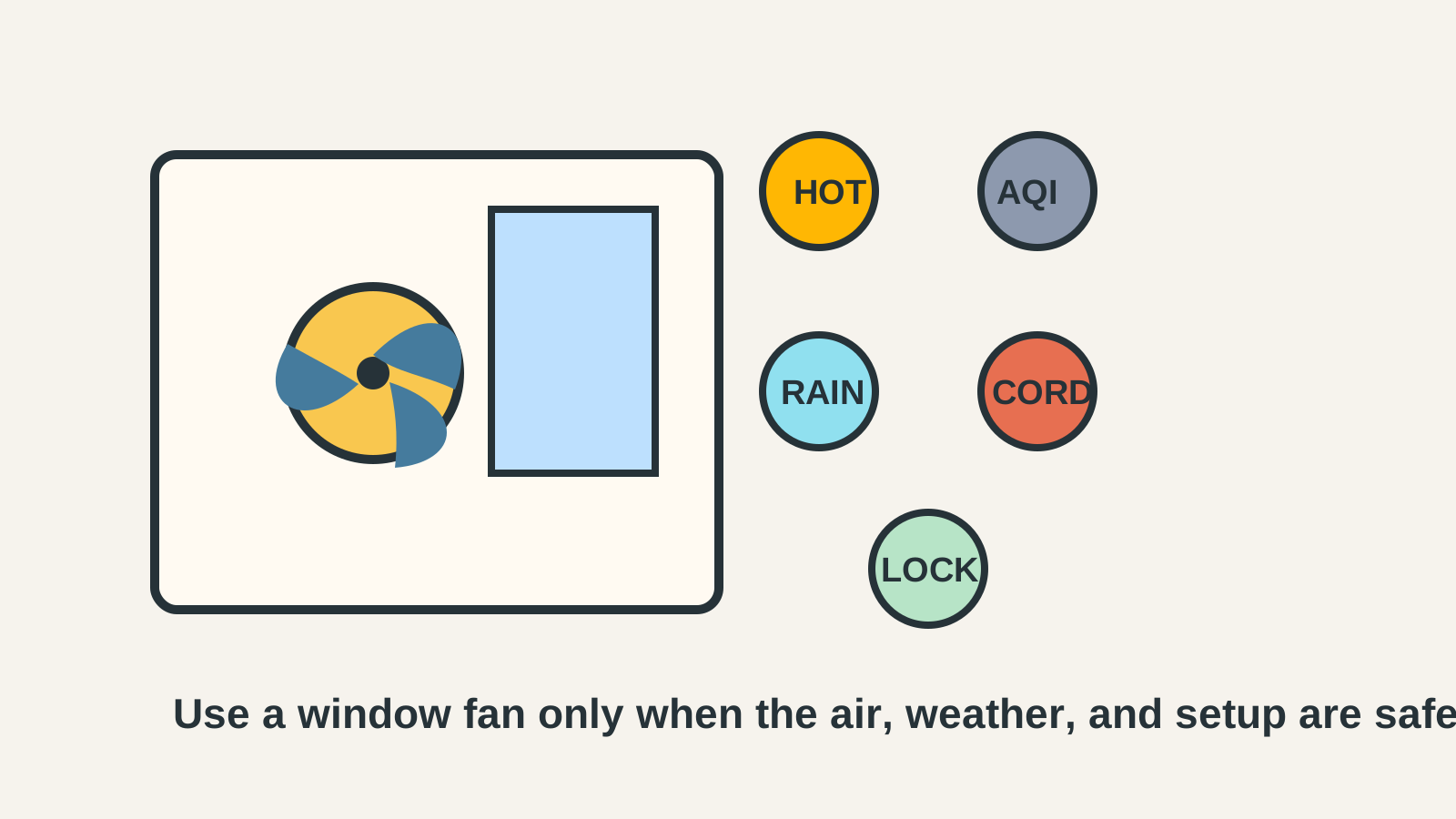
As the outside air finally drops below the indoor temperature, usually well after sunset, open the apartment back up and let it breathe. Aim for a path: an opening on one side as intake and another as exhaust, so air actually crosses the rooms rather than stalling. The full evening routine, including when natural wind does the work for you and when to keep windows shut for air quality, is in the night-cooling fan and window strategy, and the conditions where you should not open up at all, such as wildfire smoke or hotter outside air, are in when not to use a window fan.
The bedroom is its own problem, because even a room you kept dark and shut can stay too warm to sleep in at midnight. Sleeping through it has a separate routine of bedding, showers, and safe fan use, which is why it gets its own guide: how to sleep during a heatwave.
Warning signs that mean stop and act
Comfort is not the only thing at stake in a heatwave. Know the line between uncomfortable and dangerous, because the response changes.
The NHS lists the signs of heat exhaustion as tiredness, dizziness, a headache, feeling or being sick, heavy sweating with pale clammy skin, cramps, a high temperature, intense thirst, and irritability. If someone shows these, act within about 30 minutes: move them to a cool place, remove unnecessary clothing, give them water or a rehydration drink, and cool their skin by sponging or spraying with cool water and fanning them, with cold packs wrapped in cloth under the armpits or on the neck.
Heatstroke is the emergency. The NHS says to call 999 if a person has a very high temperature, hot skin that is not sweating, a fast heartbeat, fast breathing or shortness of breath, confusion and loss of coordination, a seizure, or a loss of consciousness. WHO gives a similar list, including someone who feels faint, stops sweating, becomes delirious, or loses consciousness. While you wait for help, keep cooling them, for example with a cool wet sheet.
Do not wait this out alone if you are responsible for someone at higher risk. WHO, the CDC, and UK guidance all stress checking on older neighbours, very young children, and people with chronic illness or who live alone, more than once a day during hot spells.
When passive cooling is no longer enough
Honesty matters here. Blocking the sun, cooling your body, and ventilating at night keep many flats liveable. They do not always win.
If the indoor air stays dangerously hot, if a vulnerable person is struggling, or if symptoms appear, stop treating it as a comfort problem. A fan is the clearest example of a measure that has limits. Moving air keeps you comfortable, but official guidance warns it stops being protective once a room gets hot enough, and the evidence is contested in humid heat. The fan vs air cooler vs portable AC guide covers exactly where that boundary sits and why experts disagree. The safe move when passive measures fail is not a better fan. It is real cool air: go to an air-conditioned public space, stay with someone who has cooling, or add a device that can actually remove heat. Which device, and in which conditions, is the subject of the next article in this series.
A heatwave indoors is a day you manage in stages. Bank the cool early, seal and shade through the worst of it, cool your body when the room will not cooperate, flush the heat at night, and keep one eye on the people most at risk. The plan is boring on purpose. Boring is what keeps a hot flat safe.
What to buy and where it fits
As an Amazon Associate, House of Agile earns from qualifying purchases. Prices and availability change, so check the current listing before buying.
The plan above costs nothing but attention. A few cheap tools make it easier to run, and none of them replaces real cool air when passive measures stop working.
- Indoor and outdoor thermometer (Timing tool). Best for: Knowing the exact moment outside air gets hotter than inside, so you close up at the right time. In short: two readings on one display; the whole morning and evening routine hangs on that comparison. Watch out: Put the outdoor sensor in shade, or sun on the probe will read far too high. Compare options on Amazon
- Thermal blackout curtains (Sun blocking). Best for: Sun-facing windows when you have no external shutters. In short: a light-coloured or white-backed face toward the window reflects more heat. Watch out: Internal curtains help less than external shutters because the sun has already reached the glass. Compare options on Amazon
- Box fan for the dawn flush (Airflow). Best for: Pushing hot indoor air out of a window while cooler morning or evening air comes in elsewhere. In short: cheap, high airflow; see the window fan guides linked above for placement. Watch out: A fan cools people, not rooms, and stops being protective in extreme heat. Compare options on Amazon
- Reusable cold packs (Body cooling). Best for: Cooling pulse points in the hottest hours, and the first aid steps above, wrapped in cloth. In short: keep a few in the freezer through a heatwave. Watch out: Never put ice or cold packs directly on skin, and never delay calling for help when heatstroke signs appear. Compare options on Amazon
This article is independent analysis by House of Agile. It summarises public health and energy guidance and is general information, not medical advice. During extreme heat, follow your local health authority and emergency services.
Sources
Heat coping and home cooling guidance
- World Health Organization, "Heatwaves: how to stay cool." Blocking sun by day, night ventilation, the 32 C day and 24 C night targets for vulnerable groups, hydration, cool showers, and spending hours in a cool public place. https://www.who.int/news-room/questions-and-answers/item/heatwaves-how-to-stay-cool
- World Health Organization, "Climate change, heat and health." Who is most at risk, and that heat impacts are largely preventable. https://www.who.int/news-room/fact-sheets/detail/climate-change-heat-and-health
- NHS, "Heatwave: how to cope in hot weather." Close windows and coverings by day and open at night when cooler, fans below 35 C, cold drinks, and cooling the skin. https://www.nhs.uk/live-well/seasonal-health/heatwave-how-to-cope-in-hot-weather/
- GOV.UK, "Beat the heat: staying safe in hot weather." Close curtains on sun-facing rooms, open windows only when cooler outside, and check on people most at risk. https://www.gov.uk/government/publications/beat-the-heat-hot-weather-advice/beat-the-heat-staying-safe-in-hot-weather
- US Centers for Disease Control and Prevention, "About Heat and Your Health." At-risk groups, using cooling centres, hydration, and checking on others. https://www.cdc.gov/heat-health/about/index.html
Heat illness warning signs and first aid
- NHS, "Heat exhaustion and heatstroke." Signs of each, the cooling steps for heat exhaustion, and when to call 999. https://www.nhs.uk/conditions/heat-exhaustion-heatstroke/
How fans and cooling actually behave
- US Department of Energy, Energy Saver, "Fans for Cooling." Fans create a wind chill effect and cool people rather than rooms. https://www.energy.gov/energysaver/fans-cooling
- US Environmental Protection Agency, "Extreme Heat and Indoor Air Quality." Do not rely on electric fans for cooling once a room is in the mid-90s Fahrenheit, and use air conditioning or public cooling centres in extreme heat. https://www.epa.gov/emergencies-iaq/extreme-heat-and-indoor-air-quality