Fan vs Air Cooler vs Portable AC: What Actually Cools a Room?
A fan moves air, an evaporative cooler adds humidity, and a portable AC removes heat but must vent outside. An evidence-led guide for renters choosing without a split system.
Walk into any shop in a hot week and three very different machines are all labelled as cooling: a fan, an evaporative air cooler, and a portable air conditioner. They are not three price points for the same thing. They do different physical jobs, and the one that fits your flat depends on your climate, your humidity, and whether you can vent a hose out of a window. This guide is about the physics and the conditions, not a product to buy, because the right answer changes from one apartment to the next.
It is written for the common European case: a renter who cannot install a fixed split system on the wall and has to choose among the devices that just plug in.
What each device physically does
Start with the job, because the marketing blurs it.
A fan moves air. It does not lower the temperature of a room. The US Department of Energy is blunt about this: fans create a wind chill effect that makes you feel more comfortable, which means they cool people, not rooms. Sit in the moving air and your sweat evaporates faster and you feel cooler. Leave the fan running in an empty room and you have simply stirred warm air. That is not a flaw, it is the whole design, and it is why a fan is the cheapest comfort per euro when you are in the room to feel it.
An evaporative cooler, sometimes called an air cooler or swamp cooler, actually lowers air temperature, but only under the right conditions. It pulls air across water-soaked pads, and the evaporating water cools the air. The Department of Energy puts the drop at roughly 15 to 40 F for the air leaving the unit, but adds two hard limits: these coolers are "only suitable for areas with low humidity," and they "add humidity to the air," so they "should not be used in humid climates." They also need a window cracked open so the moist air has somewhere to go. An evaporative cooler is a dry-air machine.
A portable air conditioner is the only one of the three that removes heat from the room the way a fixed AC does. It uses refrigeration to pull heat and moisture out of indoor air. The catch is basic thermodynamics: that heat has to go somewhere, so the unit must reject it outdoors through an exhaust hose, normally fitted into a window with a kit. There is no such thing as a portable air conditioner that cools a sealed room with no hose to the outside. The Department of Energy notes that room air conditioners cool individual rooms rather than a whole home, with typical capacities in the range of about 5,500 to 14,000 BTU per hour.
Climate and humidity decide more than price
The single biggest mistake is buying for the picture on the box instead of the air in your region.
In a dry inland European summer, an evaporative cooler can genuinely take the edge off a room for very little energy, and the extra humidity it adds is not a problem because the air was dry to begin with. In a humid coastal or maritime climate, the same device can make a room feel worse: it lowers the thermometer a little while raising the moisture, and damp warm air is exactly what makes a heatwave feel unbearable. This is the clearest example of why there is no universal best cooler.
A portable air conditioner does not care about outdoor humidity in the same way, because it removes moisture rather than adding it. That makes it the device that works in humid heat, where an evaporative cooler fails. It is also the device most able to bring a room to a genuinely lower, drier temperature for a vulnerable person or for sleep.
A fan works anywhere as a comfort tool, but its limit in serious heat is real and worth stating honestly. The EPA advises not to rely on electric fans for cooling once a room is in the mid-90s Fahrenheit, roughly 35 C, because at that point a fan will not prevent heat-related illness. The NHS frames the same line from the other side, saying fans can help while the temperature is below 35 C. Newer research complicates this, suggesting fans may still help in hot but humid conditions because you sweat more for the fan to evaporate, while the case for a fan is weakest in very hot, dry air. The safe reading is that a fan is for comfort and is not a heat-emergency device, especially for vulnerable people.
Ventilation and installation friction, the renter reality
For someone who cannot drill into a wall, how the device connects to the outdoors often decides everything.
- A fan has no installation. It plugs in and moves. Where to place it for whole-room airflow, and whether a bigger fan is worth it, are covered in where to put a window fan so it actually moves air and box fan vs desk fan.
- An evaporative cooler also just plugs in, but it needs a window left ajar for fresh air and regular refills of the water tank. It is low friction but high upkeep.
- A portable air conditioner needs its exhaust hose vented through a window, with a panel or kit to seal the opening. In a rented flat with tilt-and-turn or casement windows common across Europe, that seal can be fiddly, and a poorly sealed window lets the heat you just pumped out leak straight back in.
There is one more portable AC detail worth understanding without exaggeration. Many cheaper units are single-hose: they take air from inside the room, use it to cool the machine, and blow it outside. Because that air is being exhausted outdoors, replacement air gets pulled into the flat from hallways, gaps, and other rooms, and some of it is warm. The unit then has to fight that infiltration. A dual-hose design, which draws its own outdoor air for the machine through a second hose, avoids most of that effect. Single-hose units still cool, they just work harder to do it. Treat the exact efficiency difference as something to check on a specific model, not a fixed number.
Noise, electricity, and how each one fails
Every device has a failure mode. Knowing it prevents disappointment.
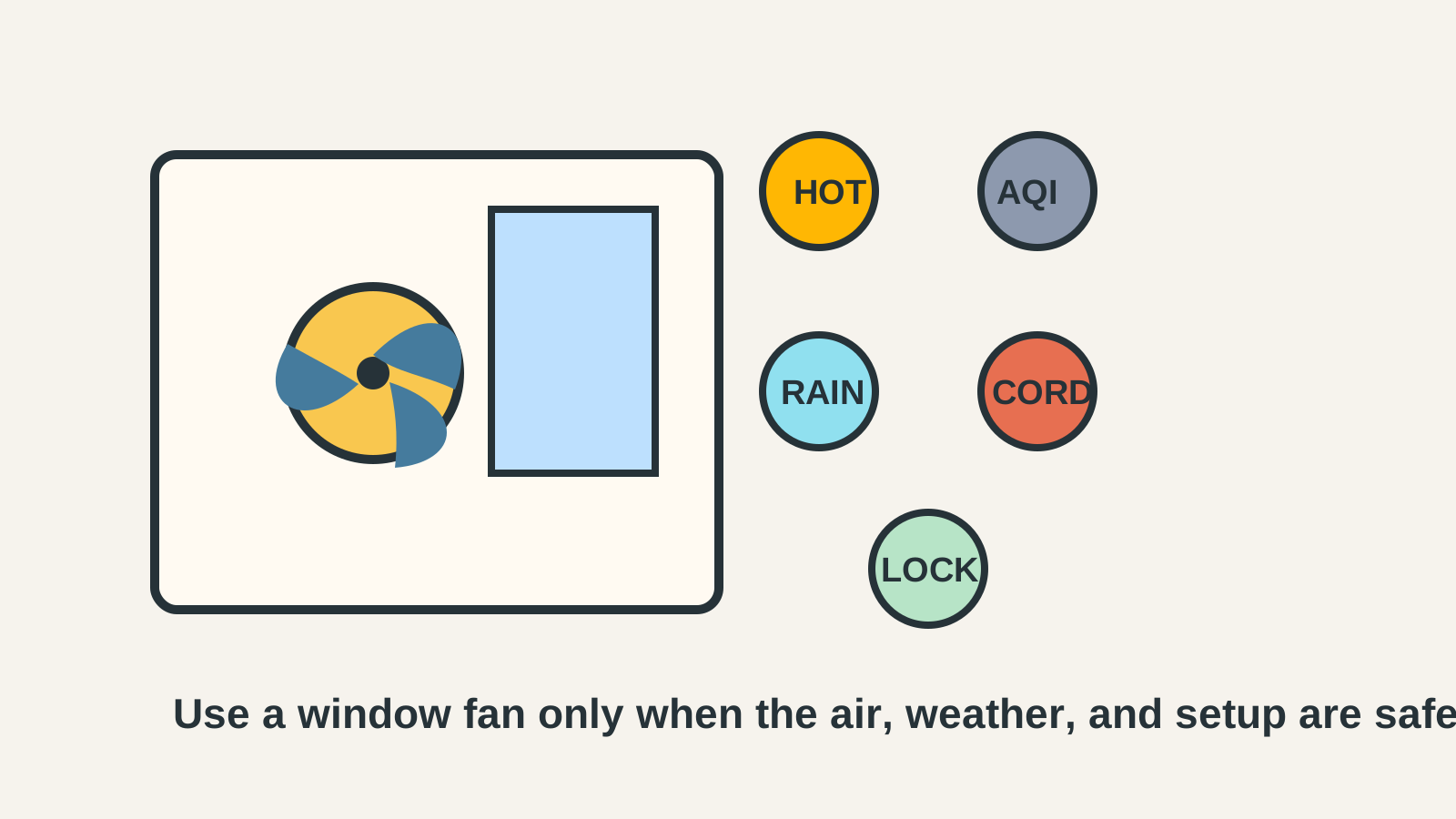
A fan is quiet and cheap to run, and it fails by simply not being enough: in extreme heat it keeps moving air without lowering the room, and for a vulnerable person that can be a false sense of safety. Its safety conditions, including heat, smoke, and electrical cautions, are covered in when not to use a window fan.
An evaporative cooler uses modest power but depends on dry air and a water supply. It fails by adding humidity: run it in already-damp air and you trade a small temperature drop for a clammy room, and over time persistent damp is its own indoor problem.
A portable air conditioner is the heaviest user of electricity of the three and the loudest, because the compressor and exhaust fan run hard. Some units evaporate their condensate, while others collect water you have to empty. It fails through bad venting, a leaky window seal, or an undersized unit in too large a room. It is the most capable device and the most demanding one.
So what should a renter actually pick?
There is no single winner, only a fit.
If you mostly need to feel cooler while you are in the room, your budget is tight, and you cannot modify anything, a fan is the honest first choice. Place it well, use it for comfort, and pair it with the rest of the daily plan in how to cool an apartment without AC.
If you live in a dry-summer region and want to lower the air temperature cheaply, an evaporative cooler can work, as long as you accept the added humidity and the water refills and you keep a window cracked.
If you need to genuinely lower the temperature in humid heat, or you are cooling a room for someone vulnerable, or you cannot sleep because the bedroom stays hot, a portable air conditioner is the device that can actually remove heat, accepting the cost, the noise, and the venting. A dual-hose unit is worth seeking out, and getting the window seal right matters more than people expect. If sleep is the real problem, the bedroom routine in how to sleep during a heatwave covers what to do alongside the device.
Buy the job, not the label. A fan, an air cooler, and a portable AC are three different tools, and the heatwave you are actually having, dry or humid, mild night or relentless, decides which one earns its place.
What to buy and where it fits
As an Amazon Associate, House of Agile earns from qualifying purchases. Prices and availability change, so check the current listing before buying.
Pick the device by your climate and venting options first. Then use these searches as a starting point and check the specifications of any specific unit.
- Fan (Comfort). Best for: Feeling cooler while you are in the room, on a tight budget, with nothing to install. In short: cheapest to run; a box fan for window airflow, a desk fan for one person. Watch out: Cools people, not rooms, and is not a heat-emergency device. Compare options on Amazon
- Evaporative air cooler (Dry climates only). Best for: Taking the edge off a room cheaply in a dry inland summer. In short: modest power, water tank refills, needs a window ajar. Watch out: Adds humidity and can make humid heat feel worse. Compare options on Amazon
- Dual-hose portable air conditioner (Real heat removal). Best for: Humid heat, bedrooms, and cooling a room for someone vulnerable. In short: removes heat and moisture; the second hose avoids pulling warm air back in. Watch out: Heavy on electricity and noisy; must be vented outdoors. Compare options on Amazon
- Portable AC window seal kit (Venting). Best for: Sealing tilt-and-turn or casement windows around the exhaust hose in a rented flat. In short: fabric or panel kits that close the gap without drilling. Watch out: A leaky seal lets the heat you just pumped out leak straight back in. Compare options on Amazon
This article is independent analysis by House of Agile. It reflects public energy and health guidance and general physics, not professional HVAC or purchasing advice. Verify the specifications and venting needs of any specific unit before buying.
Sources
Energy and appliance guidance
- US Department of Energy, Energy Saver, "Fans for Cooling." Fans create a wind chill effect and cool people, not rooms. https://www.energy.gov/energysaver/fans-cooling
- US Department of Energy, Energy Saver, "Evaporative Coolers." Air cooled 15 to 40 F over water-saturated pads, suitable only for low-humidity areas, adds humidity to indoor air, and needs windows partially open. https://www.energy.gov/energysaver/evaporative-coolers
- US Department of Energy, Energy Saver, "Room Air Conditioners." Room units cool individual rooms rather than a whole home, typically about 5,500 to 14,000 BTU per hour, rated by EER. https://www.energy.gov/energysaver/room-air-conditioners
Fans and health in extreme heat
- US Environmental Protection Agency, "Extreme Heat and Indoor Air Quality." Do not rely on electric fans for cooling once a room is in the mid-90s Fahrenheit, since at that point fans will not prevent heat-related illness. https://www.epa.gov/emergencies-iaq/extreme-heat-and-indoor-air-quality
- NHS, "Heatwave: how to cope in hot weather." Electric fans can help while the temperature is below 35 C. https://www.nhs.uk/live-well/seasonal-health/heatwave-how-to-cope-in-hot-weather/